I didn’t know, when I started writing down what I was grateful for each morning, that I was doing something a scientist could measure. I just knew I needed somewhere to put my attention that wasn’t on myself — because left alone, my attention had a way of circling back to me, every time, like water finding the low place in a field.
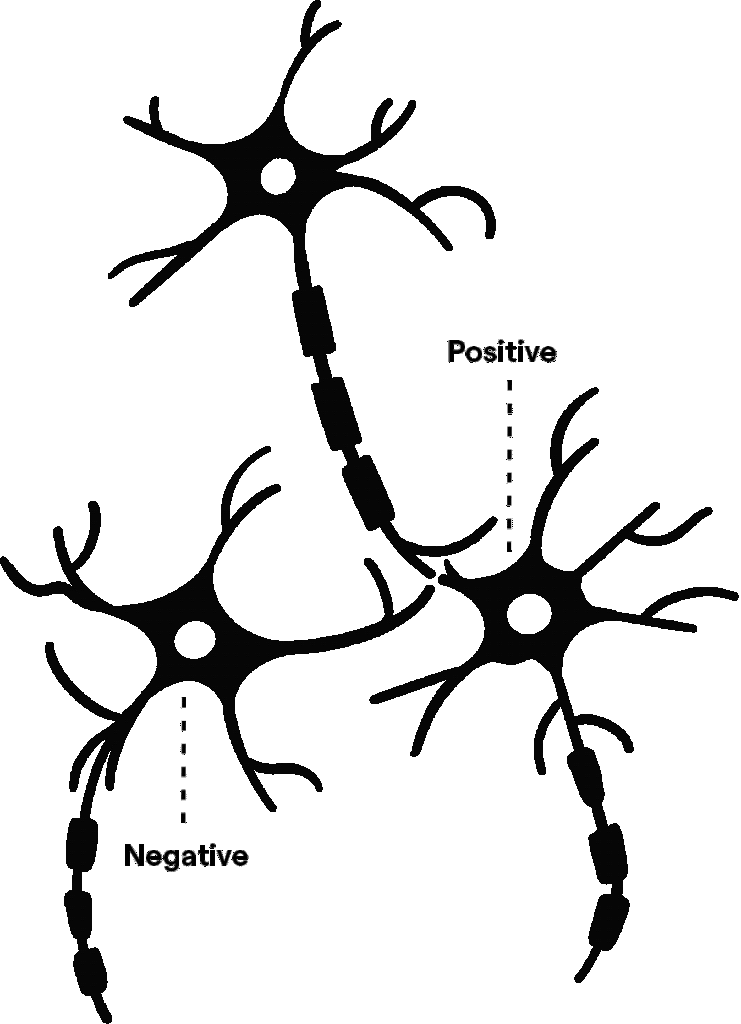
There’s a study I came across — researchers had people keep a gratitude journal for three weeks. Nothing dramatic. A few minutes a day, writing down what they were thankful for. Before and after, they scanned their brains. And something had shifted. In the part of the brain that weighs what matters — what’s worth valuing — the shift wasn’t toward getting. It was toward giving. After three weeks, these people’s brains lit up more when someone else received good, not just when they did.
I read that and thought: I know that room. I’ve been in it.
Because that’s what happened to me, in the slow, unspectacular way most real change happens. Not a lightning strike. A daily list. Small things named out loud, or on paper, or in the quiet before Madeline woke up. And somewhere in the doing of it — not the deciding, the doing — something in me that had been pointed inward for so long started to turn.
I don’t think the scientists were trying to describe grace. But I think they found some of its fingerprints anyway.
“This is the nature of the training of the soul towards righteousness, that I want to be good without thinking about it. I want to have my body train the muscle memory of my soul, trained, for example, in thanksgiving. I want the autonomic response of my body, my soul, to be gratitude. How does it get [there]? Well I have to think about it first. But over time, as you think about it, it starts to encephalize to become part of the structure of your being. It starts to become part of the autonomic response system.” — Bill Dogterom