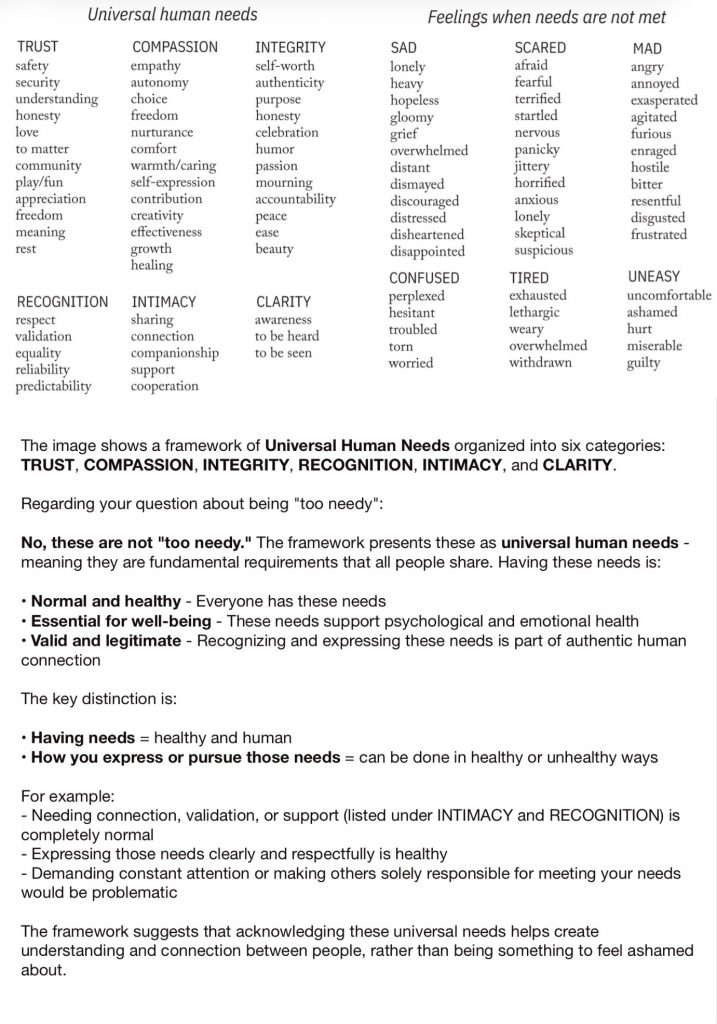
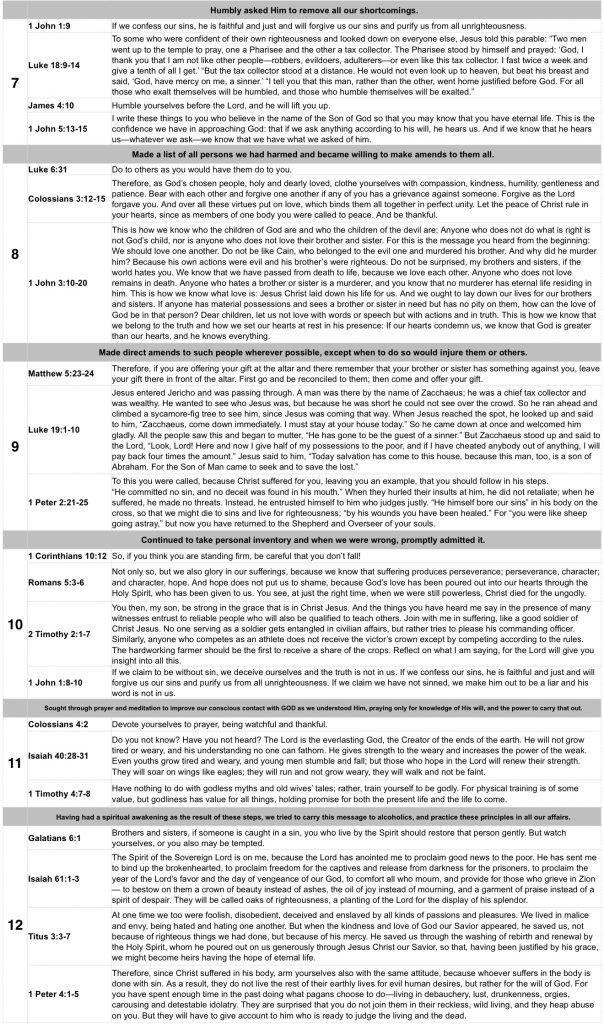
Tim Fletcher, a specialist in complex trauma, posits that 12 basic needs—spanning physical, emotional, and spiritual domains—must be consistently met to feel whole, content, and secure. Unmet needs, often stemming from childhood, lead to “crossed wires” where individuals misuse, for example, food or unhealthy habits to satisfy deep emotional cravings, resulting in trauma, addiction, and poor mental health.
Safety The foundation of healing. This isn’t just physical safety, but emotional safety —feeling like you can be yourself without fear of judgment, abandonment, or attack.
Physical Needs The basics of life: food, water, sleep, and shelter. Those with trauma often neglect their bodies or live in a state of high cortisol, making physiological regulation a priority.
Nurturing (Affection) The need for warmth and tenderness. This includes “Vitamin Touch” (appropriate physical touch) and kind words that validate your existence as a lovable human being.
Validation Having your feelings, thoughts, and experiences acknowledged as “real” and “okay.” Validation tells you that your internal world makes sense.
Guidance and Direction The need for a mentor or “healthy authority” to help navigate life’s complexities. It’s about learning the “how-tos” of life that trauma may have skipped over.
Protection Knowing someone has your back. This involves being shielded from harm and being taught how to set healthy boundaries to protect yourself.
Acceptance Being loved for who you are, not for what you do or how you perform. It is the antidote to the shame that tells trauma survivors they are “broken.”
Encouragement The fuel for growth. This is the positive reinforcement that gives you the courage to try new things and persevere when things get difficult.
Respect Being treated with dignity. It’s the recognition of your autonomy and your right to have your own opinions and values.
Understanding The need to be “seen” and “known.” It’s the feeling that someone truly understands your perspective and where you are coming from.
Discipline (Structure) Not punishment, but healthy structure. This provides a sense of order and predictability in life, which helps calm a dysregulated nervous system.
Comfort (Soothing) The ability to be calmed when in pain. For trauma survivors, this often means learning how to receive comfort from others and, eventually, how to self-soothe.
Our brains are wired for love and pleasure. I use these to see where my life is out of balance so I can adjust and fulfill my basic needs. Note – It is impossible for one person to fulfill all our needs. They must get met from multiple sources. Our health and happiness is our responsibility.
“Everything can be taken from a man but one thing: the last of the human freedoms — to choose one’s attitude in any given set of circumstances, to choose one’s own way.” Frankl wrote that from inside Auschwitz, which is part of why the line carries the weight it does. Everything had been stripped from him — family, possessions, dignity, safety, any claim to a future. And from inside that, he found the one thing that stayed his: how he oriented himself toward what was happening. That’s the doorway I want to walk through, because I’ve been sitting with a word lately that I think names the far side of that same doorway. Pronoia.
Pronoia is the belief that the universe — or God — is conspiring to do you good. It’s the direct opposite of paranoia: not the sense that everyone’s against you, but the conviction that you’re being worked for, not worked against. I didn’t coin the word and I’m not the first to notice the shape of it, but I want to know how it actually fits into the framework I’ve been building — neuroplasticity, recovery, emotional sobriety — because it isn’t just a nicer mood to adopt. I think it’s the target underneath all of it.
Here’s the connection. Paranoia is essentially what unresolved trauma produces relationally. A nervous system that learned early the world was dangerous, that people were unpredictable, that survival meant controlling the environment, carries a posture of the world is against me even when nothing conscious or dramatic is happening. It shows up as relational anxiety, as hypervigilance, as the problem of perception I’ve heard named in recovery rooms more times than I can count. Pronoia is the rewiring target on the other side of that — what becomes possible once the fear chain loses its grip. Not naivety. Not the absence of suffering. A fundamental orientation that reality is tilted toward me and not against me, that God is for me. Romans 8:28 is essentially a pronoia verse in that sense — all things working together for good for those who love God. And it’s the same direction an old-timer pointed me when he said acceptance is the key. Acceptance only becomes possible once I trust that what’s happening isn’t proof of my unworthiness or the world’s hostility.
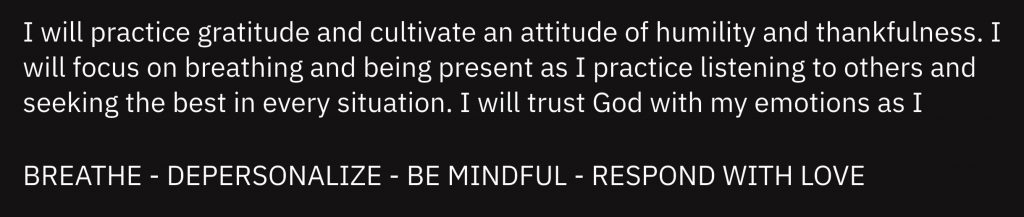
I think pronoia might actually be the disposition underneath my whole four-step discipline. Breathing is possible because I’m safe. Depersonalizing is possible because this isn’t an attack. Mindfulness is possible because the present moment isn’t a threat. A loving response is possible because I trust the outcome to God. It’s the felt sense of being held — which is exactly what fear never let me believe.
Romans 12:2 is the anchor verse for the mind side of this: do not conform to the pattern of this world, but be transformed by the renewing of your mind. The Greek word behind “transformed” is metamorphoo — metamorphosis. Not behavior modification bolted onto an unchanged self, but actual restructuring. It’s remarkable how many other verses form a constellation around exactly this. Ephesians 4:23 locates the change in the attitude, the underlying orientation, not just the behavior on top of it. Philippians 4:8 — think on whatever is true, noble, right — is ancient cognitive rewiring, directed attention reshaping the mind centuries before anyone had the word neuroplasticity for it. Romans 8:31, if God is for us, who can be against us, might be the most direct pronoia verse in scripture. First John 4:18, perfect love drives out fear, might be the whole framework in a single sentence — fear isn’t defeated by trying harder, it’s displaced by love moving in.
But I ran into a real tension holding this next to something I’ve heard in AA my whole sober life: you live your way into right thinking, you can’t think your way into right living. We have a thinking and perception problem — that’s not controversial in recovery circles, it’s foundational. So which is it? Does transformation start with the mind, or does right living have to come first and the thinking follow?
I don’t think it’s a contradiction so much as two different problems being addressed. AA’s insight is aimed at the alcoholic paralyzed by overthinking, rationalization, self-deception — the mind that will talk you out of sobriety, justify the drink, construct elaborate reasons the rules don’t apply to you. For that trap, don’t wait to think your way to willingness. Act. Show up. Do the next right thing, and the thinking follows. That’s genuinely wise for that particular problem. But the renewing-of-the-mind insight is aimed at something underneath the rationalizing surface — the belief system itself. The core convictions about who I am, whether I’m safe, whether I’m loved, whether God is for me. Those beliefs generate everything else, and they can’t be acted into existence. They have to be received and renewed. So maybe it’s layered: I act my way into right living, and I am renewed my way into right being. AA addresses the first. The deeper spiritual and therapeutic work addresses the second. Not a contradiction. A complete picture.
That raises the harder question — where’s the handoff? What actually has to happen to move from one to the other? I think it goes something like this, in sequence, though nobody moves through it cleanly. First comes sobriety — stopping the behavior. Then structure — steps, fellowship, accountability, service, building the container. Then insight — starting to see the pattern, the chain, the root causes. Then grief — actually feeling what was buried, which is the hardest stage and the one most people never reach, because you cannot heal what you refuse to feel. Then integration — the wound losing its power not because it vanishes but because it’s finally been witnessed, named, and held in a context of love and safety. Then, somewhere past that, transformation — the new identity beginning to feel more true than the old one ever did. I think I’m somewhere between grief and integration right now. The concrete breaking open in me over the last year was grief finally becoming possible after decades of the container being built around it.
Which leads to the question underneath all of this: is complete healing actually available, or is the real goal just learning to be okay with whatever circumstances life hands me? I don’t want a tidy answer to that, because I don’t think there is one. The nervous system does rewire. Beliefs do change. People who’ve carried profound childhood trauma do reach real freedom, real peace, real joy they couldn’t have imagined earlier — that’s documented, and I believe it’s available to me. But “complete” healing, in the sense of the wound disappearing entirely, might be the wrong frame altogether. Paul kept his thorn. The resurrected Christ still carried his scars. What changes isn’t that the history disappears — it’s that it loses its authority. It stops running the show. It becomes part of the story instead of the whole of it. The goal was never to become someone who was never wounded. It’s to become someone whose wound has been redeemed, which turns out to be more powerful anyway, because it’s the wound that gives me whatever ability I have to reach people no one else can reach.
And “being okay with whatever circumstances life affords” undersells where this is actually headed. Acceptance isn’t resignation. It isn’t learning to tolerate pain stoically. It’s arriving at a place where I trust the one holding me enough that circumstances lose their power to define me. That’s pronoia fully realized. That’s Romans 8:28 lived from the inside rather than quoted from the outside. Not I’m okay with whatever happens, but I trust the one in whose hands whatever happens rests.
Which brings me back to Frankl, standing in the one place on earth where every external freedom had been stripped away. He found that the choice of attitude was the one thing untouchable by circumstance — the gap between stimulus and response, the place where human freedom actually lives. Paranoia says the universe is against me, therefore I’m a victim of my circumstances. Frankl says circumstances don’t get the final word over my inner life. He arrived at nearly the same place I’m reaching for through philosophy and observation rather than theology — that reality isn’t hostile at its core, and the self retains sovereignty over its own orientation no matter what the world does to it.
But I think faith takes it one step further than Frankl could. Frankl gives me the freedom to choose my attitude. Romans 8 gives me something to choose it toward — not just stoic inner sovereignty, holding the line alone, but the arms of a Father actively working all of it together for good. Frankl says I can choose. Paul says I’m held while I choose. Together, that’s the whole thing. The freedom Frankl names is real. The love Romans 8 describes is what makes that freedom sustainable instead of exhausting.
And that gap Frankl described — between stimulus and response — is exactly what my four-step discipline is training me to inhabit. Breathe, depersonalize, be mindful, craft a loving response. I’m not managing my reactions from the outside. I’m expanding that gap through practice, making room for a choice where before there was only reflex. Thirty years of sobriety, a marriage that broke open and is being rebuilt, a concrete floor finally cracking after decades — the trajectory is clear enough that I don’t think the real question left is whether this is available to me.
The question is just how far I’m willing to let the love go.
After 30+ years of sobriety, faith, and searching, clarity arrived:
“I was consumed with self in all forms — self-centeredness, self-pity, self-seeking — all of which stemmed from pride.”
Pride is not simply arrogance. It is the organizing principle of a wounded self. When raised in chaos and danger, the self curls inward to survive. What begins as adaptation becomes the prison.
This explains everything:
Self-pity, self-seeking, and self-centeredness are not separate problems — they are one root wearing different clothes.
The “attitude problem” is not a character flaw — it is survival mode that outlived its purpose.
Control, perfectionism, and relational anxiety are symptoms of the same fear underneath.
False pride and insecurity are two sides of the same coin: insecurity is the wound, false pride is the armor. The armor creates the pressure to perform and control — which sets up the perfectionism trap.
The Chain: How Fear Becomes Shame
Understanding the chain is the beginning of breaking it:
FEAR → CONTROL → PERFECTIONISM → SHAME
Fear is the wound — installed early by a violent alcoholic father and a narcissistic mother.
Control is the response — if I manage everything, I am safe.
Perfectionism is control applied to performance — I must not be wrong.
Shame is the verdict — I am wrong, I do things wrong, there is an undercurrent I cannot shake.
The message “I am wrong” was not a thought developed over time — it was installed before the capacity to question it existed. This is not a moral failure. It is wiring.
The Turning Point: “This Isn’t Her — This Is Me”
After many years in marriage counseling, clarity arrived like a banner in the sky:
“This isn’t her. This is me. I have been treating her like an enemy — and I do this with everyone.”
That honest moment of clarity opened the door to the question that has been organizing everything since:
How do I not make it about me?
The answer is not self-erasure. It is self-surrender — which is different. One leaves you empty, the other leaves you free.
To love others well, there must be a stable, dignified self to give from. Learning to love yourself, forgive yourself, and embrace your value is not selfishness — it is the foundation from which other-centered love flows.
The Framework: This Is What Love Looks Like
When relational anxiety rises — at work, at home, in any moment of fear or perceived threat — this is the practiced response:
BREATHE — Pause before reacting. The breath is the only autonomic function under conscious control — it signals safety to the nervous system before the mind catches up. This is the interrupt.
DEPERSONALIZE — Ask: Is this actually about me? Most of the time, it is not. This breaks the shame loop before it starts — separating the situation from your identity and worth.
MINDFULNESS — Be present to what is actually happening — not to the story fear is telling. What does this person or situation actually need right now? Curiosity replaces defensiveness.
LOVING RESPONSE — Choose kindness, patience, and dignity — not because it is deserved, but because this is who you are becoming. This is the outward expression of an inward transformation.
This framework moves inward to outward: body, then mind, then action. That is the right order — neurologically and spiritually.
What Kindness Looks Like in Practice
Kindness is not a feeling — it is a choice of action. In a moment of stress, it looks like:
Patience — slowing down when everything in you wants to react
Gentleness — lowering your tone and softening your posture
Dignity — treating others (and yourself) as worthy of respect
Presence — actually listening instead of preparing a defense
Honesty — telling the truth about your feelings without weaponizing them
These are not performances for others. They are the practice of becoming free.
The Theological Anchor
The AA insight, the therapeutic work, and the biblical call are all pointing to the same thing. Romans 12 describes a person transformed by the renewal of the mind — no longer conformed to the pattern of self-protection, but shaped by love that is genuine, patient, and other-centered.
Love your neighbor as yourself — this implies that a healthy self-regard is the baseline, not the enemy. The goal of this work is not to disappear, but to be free enough to truly give.
“For by the grace given me I say to every one of you: Do not think of yourself more highly than you ought, but rather think of yourself with sober judgment.” — Romans 12:3
The ancient phrase incurvatus in se — the self curved inward on itself — describes exactly what fear produces. Love is the unbending. It cannot be manufactured from willpower. It flows from trust in God and from receiving grace honestly — which is what confession, fellowship, marriage, and therapy are making possible.
Evidence That Change Is Real
This is not theory. There is evidence:
A marriage saved — not by performance, but by honesty about things buried under 100 feet of concrete.
The shift away from adrenaline as a coping mechanism — one of the hardest changes, motivated by love.
30+ years of sobriety and faith — the foundation on which this clarity is now building.
The willingness to confess in the face of shame and lean into connection rather than retreat.
This moment — where wisdom that has been arriving for decades is finally being received rather than deflected with “yeah, but.”
The brain rewires through sustained new patterns of thought and relationship. Counseling, fellowship, the marriage — these are the conditions where transformation actually happens. The neurologists prognosis was not the final word.
The Simple Summary (the “attitude problem”)
Fear kept me curved inward. Love turns me outward.
Breathe. Depersonalize. Be present. Respond with kindness.
I’ve identified a pattern that fuels the relational anxiety underneath most of my reactivity: fear, then control, then perfectionism, then shame. It runs in that order, every time, fast enough that I usually only see it in the rearview mirror. So I’ve built a new discipline around interrupting it — breathe, depersonalize, practice mindfulness, then craft a loving response. My hope is that doing this consistently will actually rewire my brain, not just help me manage myself better in the moment. I wanted to know whether that’s a realistic hope, or whether I was dressing up self-help optimism in nicer language.
It turns out it isn’t optimism. It’s neuroscience. The formal name for what I’m hoping to do is neuroplasticity — the brain’s demonstrated ability to form new neural pathways in response to repeated new patterns of thought and behavior. The brain isn’t fixed. It rewires based on what gets practiced, which means the four-step discipline I’ve built isn’t a coping trick sitting on top of an unchangeable wiring diagram. It’s the actual mechanism of change.
What surprised me is how closely my own sequence maps onto frameworks that already exist with research behind them. The pause-and-choose structure — interrupting the reactive pattern before it runs to completion — is essentially what Dialectical Behavior Therapy teaches: pause, observe, choose a skillful response instead of a reactive one. The “depersonalize” step is what Acceptance and Commitment Therapy calls defusion — creating distance between myself and the story my mind is telling, so I’m not fused with it, so it doesn’t get to drive. And starting with breath, before doing anything cognitive at all, is the correct order somatically. The body has to be addressed before the mind, especially with trauma responses, because the nervous system doesn’t wait for insight — it fires first.
There’s a name for the specific capacity all of this is building: response flexibility. It’s the growing ability to pause between stimulus and response, to let a gap open up where there used to be none. Viktor Frankl located human freedom exactly there — in that space between what happens to you and what you do about it. For most of my life that gap didn’t exist. Fear moved straight into control, control into perfectionism, perfectionism into shame, with nothing in between to interrupt it. What I’m building now, four small steps at a time, is the gap itself.
None of this disappears overnight. The old pattern doesn’t vanish — it loses its dominance. The new pathway has to be practiced enough times to become more automatic than the wiring that’s been running since childhood. But I’m not only managing symptoms while the underlying pattern stays fixed underneath. I’m doing the actual rewiring. That’s the work.
And I think thirty-one years of sobriety and a life built on faith means the soil for this was already prepared long before I had language for any of it. The discipline is new. The ground it’s growing in isn’t.
I asked myself a question I couldn’t shake: if feelings aren’t tangible, how can they be the most real thing I know?
I can’t weigh a feeling or hold one. But I can’t doubt one either. I can argue about whether the chair is solid. I can’t argue my way out of grief once it is sitting on my chest. Pain doesn’t become real when a doctor confirms it on a scan. It was real to me before anyone looked.
Then I asked whether feelings count as tangible after all, since they do things to the body. Fear changes my breathing and my blood pressure. Joy loosens my shoulders. A heart monitor can confirm that I’m afraid, but it can’t feel it. That’s the part I keep coming back to. A feeling can be measured from the outside and still only be known from the inside, and I think that’s what makes it so real.
But the philosophy was never the point for me. The point is what I do with them.
For most of my life the feelings that mattered were the buried ones. I was told, or I decided, that they weren’t real, weren’t appropriate, weren’t safe. “Feelings aren’t real” helped me survive. It also kept me stuck, because what’s buried doesn’t die. It goes underground and drives from below, shaping my decisions and my marriage in ways I couldn’t see because I’d never looked.
So I’ve come to think emotional maturity isn’t a destination. It’s a willingness to turn toward what I spent a lifetime avoiding and say: this is real, it happened, it lives in my body, and it has something to tell me. That isn’t self-indulgence. It’s courage.
Paul says in Ephesians 6:12 that we don’t wrestle against flesh and blood. The fight isn’t with the person who dismisses my feelings, or with the old slogan that got me through early recovery, or even with the feelings. It’s with the fear, pride and shame that insist my feelings are too dangerous to feel, my wounds too deep to heal, and my God too small to trust with the actual me.
That last one is the hardest. Trusting God with the managed version of me is easy. Handing him the whole thing is not: the buried grief, the pride that won’t yield, the fear that has been running the show. But he knew me before I started building a safer self. He isn’t frightened by what’s in there, and he wasn’t surprised by it. He doesn’t need my best version. He needs my honest one.
The feelings are real, and so is the One who holds the outcome.
“I earnestly advise every alcoholic to read this book through, and though perhaps he came to scoff, he may remain to pray.” William D. Silkworth, MD — Pg. xxx
“God is everything or he is nothing. God either is or he isn’t. What was our choice to be?” — Pg. 53
We asked His protection and care with complete abandon. — Pg. 59
“But seek first the kingdom of God and his righteousness, and all these things will be added to you.” — Matthew 6:33
God, I admit that I am powerless over alcohol (or my addiction). My life has become unmanageable. I cannot do this alone. Please show me the truth about my condition and remove the denial that keeps me stuck. Help me become willing to seek the help I need. Amen.
God, I know that I cannot recover on my own. I believe that a Power greater than myself can restore me to sanity. Help me become willing to believe. Remove my doubts and open my mind to Your power. Lead me toward truth and healing. Amen.
Pg. 63 – God, I offer myself to Thee – to build with me and do with me as Thou wilt. Relieve me of the bondage of self, that I may better do Thy will. Take away my difficulties, that victory over them may bear witness to those I would help of Thy Power, Thy Love and Thy Way of Life. May I do Thy will always!
Pg. 67 RESENTMENT – We asked God to help us show them the same tolerance, pity, and patience that we would cheerfully grant a sick friend. When a person offended we said to ourselves, “This is a sick man. How can I be helpful to him? God save me from being angry. Thy will be done”.
Pg. 68 FEAR – We ask Him to remove our fear and direct our attention to what He would have us be.
Pg. 69 SEX – We asked God to mold our ideals and help us live up to them.
Pg. 69 SEX – In meditation, we ask God what we do about each specific matter.
Pg. 70 SEX – To sum up about sex: We pray for the right ideal, for guidance in each questionable situation, for sanity and for strength to do the right thing.
Pg. 76 My Creator, I am now willing that You should have all of me, good and bad. I pray that You now remove from me every single defect of character which stands in the way of my usefulness to you and my fellows. Grant me strength, as I go out from here, to do Your bidding. Amen
Pg. 79 LEGAL MATTERS – We ask that we be given strength and direction to do the right thing, no matter what the personal consequences might be.
Pg. 80 OTHERS EFFECTED – If we have obtained permission, have consulted with others, asked God to help.
Pg. 82 INFIDELITY – Each might pray about it, having the other one’s happiness uppermost in mind.
Pg. 83 FAMILY – So we clean house with the family, asking each morning in meditation that our Creator show us the way of patience, tolerance, kindliness and love.
Pg. 86 NIGHT After meditation on the day just completed, “We ask God’s forgiveness and inquire what corrective measures should be taken”.
Pg. 86 MORNING Before we begin our day, “we ask god to direct our thinking, especially asking that it be divorced from self-pity, dishonest or self-seeking motives”.
Pg. 86 MORNING In thinking about our day, “We ask God for inspiration, an intuitive thought or decision”.
Pg. 87 MORNING We usually conclude the period of meditation with a prayer that we be shown all through the day what our next step is to be, that we be given whatever we need to take care of such problems. We especially ask for freedom from self-will, and are careful to make no requests for ourselves only We may ask for ourselves, however, if others will be helped. We are careful never to pray for our own selfish ends.
Pg. 87–88 ALL DAY As we go through the day we pause, when agitated or doubtful, and ask for the right thought or action.
Pg. 164 Ask Him in your morning meditation what you can do each day for the man who is still sick. The answers will come IF your own house is in order.
Your job now is to be at the place where you may be of maximum helpfulness to others, so never hesitate to go anywhere if you can be helpful. You should not hesitate to visit the most sordid spot on earth on such an errand. Keep on the firing line of life with these motives and God will keep you unharmed. Pg. 102
The 12 Spiritual Principles of Recovery
The 12 spiritual principles of recovery are as follows:
Acceptance/Honesty
Hope
Faith/Surrender
Courage
Honesty/Integrity
Patience/Willingness
Humility
Willingness/Love
Brotherly-love/Responsibility
Integrity/Discipline
Self-discipline/Awareness
Love/Faith/Service
Prayer of St. Francis (often used in AA)
Lord, make me an instrument of thy peace! That where there is hatred, I may bring love. That where there is wrong, I may bring the spirit of forgiveness. That where there is discord, I may bring harmony. That where there is error, I may bring truth. That where there is doubt, I may bring faith. That where there is despair, I may bring hope. That where there are shadows, I may bring light. That where there is sadness, I may bring joy. Lord, grant that I may seek rather to comfort, than to be comforted. To understand, than to be understood. To love, than to be loved. For it is by self-forgetting that one finds. It is by forgiving that one is forgiven. It is by dying that one awakens to Eternal Life.
I asked God for strength, that I might achieve. I was made weak, that I might learn humbly to obey.
I asked for health, that I might do greater things. I was given infirmity, that I might do better things.
I asked for riches, that I might be happy. I was given poverty, that I might be wise.
I asked for power that I might have the praise of men. I was given weakness, that I might feel the need of God.
I asked for all things, that I might enjoy life. I was given life, that I might enjoy all things.
I got nothing that I asked for—but got everything I had hoped for. Almost despite myself, my unspoken prayers were answered. I am, among all people, most richly blessed.
If You Have a Jesus You Like, You Have the Wrong One (my attitude “problem”)
Reflections on Bill Dogterom, Romans 12, and the Impossible Command to Love
“Bill Dogterom has taught many times about the love and direction of Jesus and the challenges of following Him, saying: ‘If you have a Jesus you like, you have the wrong one.’ I understand this deeply as I have struggled with fear and shame. The more I understand what love is — which is about others and being created in the image of God — the more I see that human relationships and intimacy require forgiveness, service, sacrifice, patience, kindness, the fruits of the Spirit (1 Cor 13), and maturity. It is something I must do regardless of how I feel. This is not only difficult, but impossible without hope, trust, faith in God, and obedience. It is in Romans 12 — Love in action.” – GG
The Scriptural Tension: Love vs. Self-Centered Fear
The following verses highlight the friction between our natural desire for self-preservation and the radical, outward-facing command to love like Christ:
Matthew 16:24-25 (The Death of Ego): “Whoever wants to be my disciple must deny themselves and take up their cross and follow me. For whoever wants to save their life will lose it, but whoever loses their life for me will find it.”
1 John 4:18 (The Antidote to Shame): “There is no fear in love. But perfect love drives out fear, because fear has to do with punishment. The one who fears is not made perfect in love.”
Luke 6:32-35 (The “Unlovable” Test): “If you love those who love you, what credit is that to you?… But love your enemies, do good to them, and lend to them without expecting to get anything back.”
John 15:12-13 (The Standard of Sacrifice): “My command is this: Love each other as I have loved you. Greater love has no one than this: to lay down one’s life for one’s friends.”
Galatians 5:13, 16-17 (The Internal War): “Serve one another humbly in love… For the flesh desires what is contrary to the Spirit, and the Spirit what is contrary to the flesh. They are in conflict with each other.”
Romans 12:9-10 (Sincere Action): “Love must be sincere. Hate what is evil; cling to what is good. Be devoted to one another in love. Honor one another above yourselves.”
2 Timothy 1:7 (Power Over Timidity): “For the Spirit God gave us does not make us timid, but gives us power, love and self-discipline.”
1 Peter 4:8 (The Covering of Love): “Above all, love each other deeply, because love covers over a multitude of sins.”
Comparing the Two Visions of “Love”
The Jesus We “Like” (Self-Centered)
The Biblical Jesus (Christ-Centered)
The Resulting Tension
Seeks emotional comfort
Seeks spiritual maturity
Pruning: It hurts to grow.
Avoids conflict and shame
Embraces the Cross
Vulnerability: Risking rejection.
Loves those who are “like us”
Loves the “other” and the enemy
Inclusion: Breaking our boundaries.
Based on current feelings
Based on radical obedience
Character: Doing right when it’s hard.
Conclusion: The Call to Transformation
To love as Jesus loves is humanly impossible. It requires a “metamorphosis” of the mind (Romans 12:2). We are not simply “trying harder” to be nice; we are dying to our need for control and safety so that Christ can live through us.
Reflect: Today, who in your life is owed a “debt of love” (Romans 13:8) that you have been avoiding out of fear? Will you choose the Jesus of comfort, or the Jesus of the Cross?
Prayer: Lord, renew my mind so that I may love others not out of my own fear, but out of Your infinite grace. Amen.
“And this is love: that we walk in obedience to his commands. As you have heard from the beginning, his command is that you walk in love.” I keep circling back to that verse from 2 John because of how it’s built. Obedience to God’s commands is love. And the command itself is to walk in love. It’s almost circular, and I think that’s the point — it isn’t handing me a checklist of new content. It’s naming a single, repeated way of life: love God completely, love one another concretely, love my neighbor as myself, love even the people who oppose me. None of it is arbitrary. It flows out of who God is. I love because He first loved me, and the commands just describe what it looks like to reflect that back into the world.
But walking implies something embodied. Habitual. Lived from the inside out, not just affirmed from the outside in. And that’s where Oswald Chambers has been sitting with me lately — his observation that we begin the Christian life by believing what we’re told to believe, and then have to go on to actually assimilate those beliefs until they redound to God’s glory, rather than multiplying beliefs we never make our own. Assimilation is a biological word. Food eaten but not digested passes through you without nourishing anything. I can affirm every correct doctrine about love and still be cold underneath it, because the belief was accepted but never absorbed. That’s the danger — knowing the right answers as a substitute for living the right life.
I wrote something in a journal entry back in February that I think names my version of this problem better than anything else I’ve written:
This is how I understand God. To lay all that I have at His feet. To abandon self. To unlearn survival. Then I float. Free. Free of the nucleus. I escape the self that suffocates, the stranglehold, the self that murders, the self that hides, the self that fears, the false self. The position, it’s upside down. The posture, the attitude, the economy. Give up to get. Lose to win. Love costs something now. And I am in the way.
And I am in the way. That’s not an external obstacle I’m describing. That’s me naming myself as the obstacle. I call it my “attitude problem,” and the phrase “unlearn survival” is doing precise work there — my survival instincts weren’t evil, they kept me alive. But they run on scarcity, self-protection, accumulation. The kingdom economy is the exact inversion of that: give up to get, lose to win. I can’t run both systems at once. And “free of the nucleus” is the image that’s stayed with me — the self as the thing everything else orbits around. Surrender isn’t destruction. It’s decentering. I still exist. I’m just no longer the gravity.
The gravity of the disease, as I put it elsewhere, is the core nucleus of the human condition: selfishness, self-centeredness, fear, emotions, lust, self-will, self-pity, entitlement, pride, anger. I include emotions on that list deliberately, not just the obviously sinful items. Not emotion itself, but the tyranny of being ruled by feeling — you feel, therefore you react, therefore everything becomes about your interior weather. That’s the organizing principle the gospel has to reach all the way down to.
For me, emotions have been the biggest struggle of all, because I learned, seemingly from birth, to don’t talk, don’t trust, don’t feel. That’s a survival code out of a dysfunctional, addictive family system. I didn’t choose it. I absorbed it because it kept me safe when I was small and had no other options. But the mechanisms that protected me as a child became the walls that isolate me as an adult. What was once shelter became a prison. And intimacy — with God, with anyone — requires the three things that code forbids. You have to talk honestly, trust beyond what you can control, feel what’s actually happening instead of managing it from a distance. That’s why “unlearn survival” was never poetry. It’s an actual rewiring, a retraining of how I move through the world.
The clearest place this has played out is my marriage. Saving it last year came down to one pivotal moment — an epiphany that it wasn’t her, it was me. I had to lean into and be honest about the underlying fear that runs through all of my relationships, not just this one. And once I saw that, a new question took over: how do I not make it about me? That question has deepened my spiritual practices and forced me to learn how to actually manage my emotions like an adult instead of just reacting to them.
That epiphany is the same movement my journal entry describes. The self that was in the way stepped aside long enough to see clearly. What I saw wasn’t only a marriage problem — it was the underlying fear itself, the nucleus becoming visible. And I didn’t just feel bad about it and move on. I did something with it. That’s the difference between guilt and repentance. Guilt circles back to the self. Repentance moves outward.
Madeline and I agree now that marriage is about sanctification. There isn’t a time in twenty-seven years we’d go back to. It keeps getting better — and that’s not an accident, it’s the fruit of two people willing to do the hard work, and specifically of a husband willing to take his eyes off his wife long enough to look honestly at himself. Marriage was never primarily about happiness or compatibility. It’s a crucible. It’s designed to surface exactly what’s on that second list — the selfishness, the fear, the pride, the self-pity — not to punish me with it, but to give it somewhere to go.
I asked her directly whether she agreed the marriage is solid. She said she doesn’t feel safe answering that.
That’s honest. It probably means she’s still healing, still watching to see if the changes hold. Trust that broke over years doesn’t fully return after one epiphany, no matter how genuine the epiphany was. And I think that’s its own form of sanctification for me now — learning to be okay with the uncertainty of her process. Not rushing her to a verdict. Not needing her affirmation to keep doing the work. Doing it because it’s right, not because it’s being recognized.
There’s something in the fact that I asked at all. The man shaped by don’t talk, don’t trust, don’t feel, asking his wife a vulnerable question about himself — and then sitting with an uncomfortable answer without collapsing or deflecting. That’s real movement, even if it doesn’t look like the ending I wanted. Her not feeling safe to answer is information, not rejection. It tells me where the ongoing work is. The wall didn’t come down in a year. It won’t. But she’s still there, after everything.
That’s the deepest test of whether love has become something I walk in rather than something I merely believe: loving her well when I can’t measure whether it’s landing. Giving up the need for the feedback loop. Give up to get, lose to win, in its most intimate and daily form.
I grew up in a home with an alcoholic father and a mother in survival mode. In a house like that, being honest about your feelings wasn’t safe. Feelings caused problems, escalated things, or had no room because everyone was too overwhelmed. So I learned, the way kids in that environment learn, to hide what I felt and say it sideways.
I tried to open a conversation along these lines with my mom. She told me she knows nothing about it. I don’t think that’s true, and I don’t think she’s lying. When you’ve lived in survival mode for years, it becomes your normal. You stop seeing it as dysfunction and start calling it life. There’s shame in it too: admitting what the family lived through means admitting her children were affected and that she couldn’t fully protect them. Her “I don’t know anything” was protection.
What I’ve learned is to speak from my own experience instead of describing hers. “I’ve been realizing how much I was affected growing up” is hard to argue with. “Our family was dysfunctional” is not. And I’ve learned to be patient. Some conversations plant a seed that grows quietly for months.
It makes sense given where I grew up. Sarcasm lets you say something real while keeping deniability. Defensiveness protects a self that learned early it might be attacked or dismissed. But part of me wanted to be understood and kept reaching out with tools that pushed people away, so I felt more alone even when I was reaching.
What strikes me looking back is that the people who stayed long enough and looked past the acting out said I was misunderstood. They saw something I couldn’t. The real me was in there the whole time. It was buried under armor that made sense for a child and cost me dearly as an adult.
This morning my wife described a pattern she has watched in me for all twenty-seven years of our marriage. Hearing her name it was a landmark. It was one more thing I could agree with. When I notice the pattern coming up now, I can call it self-centeredness, trust God with my emotions, and choose not to react.
That’s the difference between insight and transformation. Insight is knowing the pattern. Transformation is catching it in the moment and having a different option.
It came on an ordinary morning in a conversation with my wife. Not on a retreat or in a therapist’s office, just two people married twenty-seven years meeting each other a little more honestly. That’s grace.
This morning is a marker, a before and after, and evidence that freedom is possible for me, personally and specifically. If you grew up in an alcoholic home and see yourself in any of this, healing is possible. Adult Children of Alcoholics (ACA) and Al-Anon can help you begin, or continue.
“In your struggle against sin, you have not yet resisted to the point of shedding your blood.” I read that line this morning and it stopped me cold.
The verse comes right on the heels of chapter 11 — the hall of faith, that long roll call of people who were tortured, sawn in two, stoned, and killed for refusing to let go of what they knew was true. And then the writer turns to his readers and says, in effect: you’re struggling, yes, but you haven’t been asked to die yet. It’s both a comfort and a challenge. The comfort is that whatever I’m carrying isn’t the worst it could be. The challenge is the question underneath it — am I willing to go further, if it comes to that? What’s the line I won’t cross? What would I not give up for the sake of obedience?
For most of my life I would have read “shedding blood” as something abstract. Martyrdom. A hypothetical I’d never have to answer for. But sitting with the chapter this morning, it stopped being hypothetical. I’ve seen people die. I have, at points in my own story, romanced the idea of ending my own life. And I know, in a way I couldn’t have known thirty years ago, that the difficulty I’ve had facing fear and shame — actually facing it, not managing it or explaining it away — is its own kind of bloodshed. My personal comfort has had to be abandoned to get anywhere near freedom. That’s not a metaphor I’m reaching for. That’s just what it’s cost.
Here’s what I mean. The walls I built — the ones that kept me from feeling, from trusting, from telling the truth about what was happening inside me — didn’t go up by accident. They went up because somewhere very early, honesty felt like it would kill me. Silence was survival. So when I started, decades later, to actually let those walls come down, it felt like dying, because in a real sense it was. The part of me that stayed alive by not talking, not trusting, not feeling had to be laid down so that the part of me capable of actual love could show up. You don’t get to keep both. The old operating system has to go for the new one to run.
That’s the trade the verse is naming. Comfort is not the same thing as freedom — not when “comfort” means staying numb, staying defended, staying small enough that nothing can touch you. Real freedom costs blood. It costs the security of every strategy that kept me intact by keeping me closed.
And this is where I have to be careful, because it would be easy to confuse two things that look alike from a distance but are headed in opposite directions. Romancing suicide is self-destruction wearing the mask of escape. What I’m describing now — this slow, costly surrender — is something else entirely: not giving up, but giving over. One ends in erasure. The other, somehow, ends in life. They can look similar from far away. Up close, they are not the same road at all.
I think this is what it means to say I’m learning what love actually is. Love requires presence. It requires showing up without armor, without the pre-loaded defense, without the exit already planned in case it goes bad. For someone trained from childhood to survive, that kind of vulnerability doesn’t feel like intimacy — it feels like exposure to mortal danger. My nervous system still tells me, some mornings, that honesty will kill me. I’m learning to do it anyway.
That’s what I hear now in “resisted to the point of shedding your blood.” Not a bar I have to clear to prove my faith is real. A description of what’s already been happening, in slower motion than martyrdom but no less real: the sin being resisted is the self-protection that dressed itself up as wisdom for most of my life, while quietly making it impossible to be known — by God, or by anyone else.
I’m not writing this as a finished testimony. I’m writing it from inside the struggle it describes. But I wanted to name it plainly: this is what the verse means to me now. Not hypothetical. Actual.
Heavenly Father, I turn to you and pray now for the sprinkling of the blood of Jesus by your spirit to rest upon every mind in this place in order that their perception of what is said will be heard as you intend. Cleanse my tongue that I will be your transparent vehicle to pass on everything that needs to be said, nothing that doesn’t need to be said. Help me to be very very clear, very very simple. I pray that this will be a lifechanging word and a word that brings great honor and glory to your name. I pray this in Jesus’ name. Amen. – R.T. Kendall
My mom’s new boyfriend told me the easy yoke means to man up. He’s the smart guy at church who makes the Bible teacher hand over the pulpit. I heard it and thought, that’s not what Jesus said. I’ll admit I enjoyed thinking it a little too much.
Then I went back to Matthew 11. Jesus doesn’t say, “Try harder.” He says, “Come to me, all you who are weary and burdened, and I will give you rest.” He says He is gentle and humble in heart. That is not an invitation to toughness. It is an invitation to stop striving and rest.
A yoke was a wooden frame for two oxen, and it was also the word for a teacher’s way of life. Easy doesn’t mean it takes no effort. It means it fits, like a yoke carved for the one wearing it, so it doesn’t rub raw. I know what a bad fit feels like. I carried one for decades, and I called it responsibility.
What I hear now is the opposite of manning up. I’m allowed to say I’m tired. I’m allowed to say I can’t hold it all together and I need help. The strength comes after that, not before it, and it comes from being hitched to Him instead of pulling alone.
I don’t have to pretend I have it together anymore.
A “mensch” (sometimes spelled “mench”) is a Yiddish word that means a person of integrity and honor—basically, a really good person. It describes someone who is:
Decent and honorable
Responsible and reliable
Compassionate and kind
Someone who does the right thing
When someone says “He’s a real mensch” or “She’s such a mensch,” they’re giving a high compliment. It means the person has strong character and treats others well, even when no one’s watching.
The word has made its way into English, especially in American English, and is used beyond Jewish communities. It captures something that’s hard to express in a single English word—someone who’s not just good or nice, but who has that solid, dependable, morally grounded quality that makes them truly admirable.
In exploring the story of Judas and his betrayal of Jesus, a profound question emerged: If God is love, why didn’t God’s love save Judas? What in him resulted in death?
The answer reveals something crucial about the human condition: The tragedy of Judas wasn’t that God couldn’t or wouldn’t forgive him—it’s that Judas couldn’t forgive himself or believe he could be forgiven. His despair closed him off from the forgiveness that was available.
This stands in stark contrast to Peter, who also betrayed Jesus by denying him three times. The key difference wasn’t the severity of their betrayals, but their responses:
Peter wept bitterly but eventually returned to the community and received Jesus’s forgiveness
Judas felt remorse but fell into despair and took his own life
The Spiritual Death We All Know
There is a death that happens inside—a spiritual death that comes with shame and secrets. Shame has a way of convincing us we’re beyond reach, that we must hide, that we’re fundamentally different from others who might receive love or grace. It creates a kind of prison.
That terrible space between knowing you’ve done wrong and believing you can’t be forgiven or restored—this is where many of us live. The despair that says “this is who I am now” rather than “this is what I’ve done.”
The Core Wound
For many people in recovery, underneath all the behaviors and acting out is a core wound—often rooted in childhood trauma, abuse, or exploitation. When someone is wounded at a young age, especially through sexual abuse, shame gets attached to everything. That shame becomes the foundation upon which an entire life is built.
For 30, 40 years, a person builds their entire internal architecture on that foundation of shame. Every decision, every relationship, every coping mechanism, every way they’ve learned to survive—it’s all constructed around a broken piece of information: “It was my fault. I am fundamentally flawed. I am unlovable.”
And then God says: “That foundation is a lie. You are loved. You are mine.”
That’s not a software update. That’s demolition and reconstruction. This is what causes seismic shifts.
The Human Pattern Since the Beginning
There is a cycle that has repeated since Genesis 3:
Shame → Fear → Power/Overcompensation → Protection → Survival
Adam and Eve felt shame, they hid in fear, they tried to cover themselves (protection/control), they blamed each other (power dynamics). The first human response to feeling exposed and vulnerable was shame, then fear, then self-protection.
Shame isn’t just a thought we can correct with better information. It’s woven into:
How we perceive ourselves
How we interpret others’ responses to us
What risks we’re willing to take
What love we can receive
Our sexuality, our worthiness, our very sense of existing in the world
The Path to Freedom
The way out of this cycle is not a simple intellectual shift. It requires:
Recognizing our response → Learning to trust God with our fear → Loving ourselves as God made us
This means:
Understanding where shame started (and recognizing what was not our fault)
Seeing how fear took root
Recognizing how we’ve been trying to manage that fear through control, acting out, or hiding
Learning that there’s another way: bringing the fear to God, receiving love, learning to trust
Loving ourselves as God made us isn’t narcissism or self-indulgence. It’s agreement with God about our worth. It’s receiving His assessment instead of shame’s assessment.
This perspective brings incredible freedom.
The Role of Community and Professional Help
Healing from core wounds typically requires both spiritual and professional support:
What fellowship and spiritual community can provide:
Walking through recovery steps with faithfulness
Sharing our own experience with shame and healing
Pointing toward God’s grace and forgiveness
Being a consistent, safe presence
Helping identify patterns in behavior
What professional trauma therapy can provide:
Processing the abuse itself, not just responses to it
Untangling personal choices from what was done to us
Developing new neural pathways around shame
Addressing PTSD symptoms
Learning to differentiate between shame that belongs to an abuser and appropriate conviction about our own choices
We need both. Spiritual healing AND psychological healing. Many find that their spiritual work goes deeper and becomes more fruitful when they’re also addressing underlying trauma professionally.
God’s Response to Shame
When Adam and Eve hid in shame, God’s response is instructive:
He came looking for them
He asked questions
He covered them Himself
He didn’t abandon them to their shame
God doesn’t leave us in our survival mode. We don’t have to overcompensate or protect or perform. We can bring our fear to God instead of managing it through control or acting out or hiding.
The Sacred Work of Witnessing
When someone shares their inventory, their shame, their core wounds with us—whether in a 5th step or simply in vulnerable friendship—we are standing on holy ground. We cannot heal their core wound for them. We cannot make their seismic shift happen.
But we can:
Bear witness to their truth
Remind them who God says they are when shame is screaming otherwise
Share our own journey so they know they’re not alone
Point them toward additional help
Stay present through the earthquake
This is the work of loving one another as Christ loved us—not fixing, not solving, but accompanying one another on the path from death to life.
Conclusion
The difference between Judas and Peter, between despair and restoration, between spiritual death and abundant life—it comes down to this: Can we receive the forgiveness that is already offered? Can we trust God with our fear? Can we love ourselves as God has made us?
This is a human story since the beginning of time. And it’s the story God is still writing in each of us today.
I didn’t start this blog because I had something figured out. I started it because I was sober, successful, and quietly suffering from depression — and the truth kept showing up like fog, then burning off before I could hold onto it.
The turn began a year ago, when my wife set a boundary after 26 years that finally got through to me – change, learn empathy and compassion, and get in touch with your feelings, or I’m gone. I started journaling. I started ACA. I started writing a gratitude list every morning, small and unglamorous, day after day. And somewhere in that quiet repetition, something loosened. I began writing and talking about feelings in a language I didn’t know I had. I learned what honesty actually felt like — not the absence of lying, but the presence of truth I used to run from. I saw, for maybe the first time, how much my ego had been twisting my perception all along, dressing fear up as competence and calling it strength. And as I could finally articulate what had been suppressed for so long, this blog is where I started putting it down.
None of it is new, exactly. That’s the strange part. The insights were always mine. I just spent most of my life under a code that ACA names plainly: don’t talk, don’t trust, don’t feel. Survival rules, built for a child who needed them, still running a grown man who didn’t. Every time truth surfaced, some part of me would say yeah, but, and the fog would roll back in. I’d forget. Not because it wasn’t true — because I wasn’t built yet to keep it.
There’s a line in the Big Book about people who don’t make it: constitutionally incapable of being honest. Not dishonest by choice — built that way. I read past it for years, assuming it meant someone else. It took me a long time to see it was me.
Here’s what I understand now that I didn’t then: everyone’s access to the truth is mediated by fear. Some people’s fear was just severe enough to functionally lock the door. So it’s true — constitutionally incapable of being honest is a real condition. What it isn’t is a permanent one. The door was locked by fear, and fear can be worked with, walked through, outgrown. Being built that way isn’t a life sentence. It’s just where you started.
So this blog became the place I try to cement it. Manna that used to spoil overnight — I wanted a way to keep it past morning. Not to prove anything. Just so the fog doesn’t win, and so somewhere there’s a witness to what’s actually true, even on the days I forget it myself.
My constitution is still changing. I don’t write from the far side of it, looking back. I write from inside it, while it’s still happening — trading fear for love, control for intimacy, a life performed for a life that’s actually mine.
If you’re on your own long way home, I hope something here is useful. Not as an answer. Just company on the road.
To those who have had no agony Jesus says, “I have nothing for you; stand on your own feet, square your own shoulders. I have come for the man who knows he has a bigger handful than he can cope with, who knows there are forces he cannot touch; I will do everything for him if he will let Me. Only let a man grant he needs it, and I will do it for him.” The Shadow of an Agony, 1166 R
Sometimes, when friends tell us how well we are doing, we know better inside. We know we aren’t doing well enough. We still can’t handle life, as life is. There must be a serious flaw somewhere in our spiritual practice and development.
What, then, is it?
The chances are better than even that we shall locate our trouble in our misunderstanding or neglect of A.A.’s Step Eleven – prayer, meditation, and the guidance of God.
The other Steps can keep most of us sober and somehow functioning. But Step Eleven can keep us growing, if we try hard and work at it continually. – Grapevine, June 1958
Today I am willing to let joy have its way and practice Love: Faith-Hope-Trust, an Attitude of Gratitude and Humility
The moment I wake up I start praying to harness my thoughts and push back self ambition and vain conceit [the drift towards insanity], and continue this throughout the day:
I meditate on what I am grateful for and compose a list and share it with my community of faithful partners.
I work to monitor my attitude to maintain gratitude and humility and ask God for help to remain in that posture, I discuss my challenges with loved ones prayerfully and use breathing, writing, and grounding/meditation tools as often as possible.
“Rejoice in the Lord always; again I will say, rejoice. Let your reasonableness be known to everyone. The Lord is at hand; do not be anxious about anything, but in everything by prayer and supplication with thanksgiving let your requests be made known to God. And the peace of God, which surpasses all understanding, will guard your hearts and your minds in Christ Jesus.” Philippians 4:4-7 ESV
”The best and fastest way to find God is to hold still… Every soul before it’s born is kissed by God and spends the rest of life looking for the lover.” — Bill Dogterom
I am responsible for my attitude, my thoughts, my posture, my disposition (phroneó).
“Pretending to be a nice person is a lot like being a nice person” — Bill Dogterom
I strive to practice love and kindness – courtesy, even when I don’t feel like it, regardless of who deserves it, with others best interests in mind and try to remember – it’s not about me.
“Everything can be taken from a man but one thing: the last of the human freedoms—to choose one’s attitude in any given set of circumstances, to choose one’s own way.” —Viktor E. Frankl, Man’s Search for Meaning
When my emotions start to flare up, for any reason, I will practice getting grounded, honest, own my part, fight ego with truth about who I am, and forgive myself and others.
“Rejoice always, pray without ceasing, give thanks in all circumstances; for this is the will of God in Christ Jesus for you.” 1 Thessalonians 5:16-18 ESV
“Do nothing from selfish ambition or conceit, but in humility count others more significant than yourselves. Let each of you look not only to his own interests, but also to the interests of others. Have this mind among yourselves, which is yours in Christ Jesus,” — Philippians 2:3-5
“Our very lives, as ex-problem drinkers, depend upon our constant thought [prayer] of others and how we may help meet their needs.” — Big Book, Top of page 20
“There are two types of people in recovery: the “yeah, buts” and the “you bets!”” —Tony Fisher
”Would you rather be right, or would you rather be happy?” —Jim Foote
“Everyone’s access to the truth is mediated by fear. Some people’s fear was just severe enough to functionally lock the door. Being constitutionally incapable of honesty is true. It just isn’t permanent.” – GG
The remarkable thing about fearing God is that when you fear God you fear nothing else, whereas if you do not fear God you fear everything else. “Blessed is every one that feareth the Lord”;… The Highest Good—The Pilgrim’s Song Book, 537 L
Seeing is never believing: we interpret what we see in the light of what we believe. Faith is confidence in God before you see God emerging; therefore the nature of faith is that it must be tried. He Shall Glorify Me, 494 R
“For my thoughts are not your thoughts, neither are your ways my ways, declares the Lord. For as the heavens are higher than the earth, so are my ways higher than your ways and my thoughts than your thoughts.” Isaiah 55:8-9 ESV
“You keep him in perfect peace whose mind is stayed on you, because he trusts in you.” Isaiah 26:3 ESV
There’s a difference between having insight and being free. I know because I’ve lived on the insight side of that line for years at a time. I could tell you exactly why I react the way I do — attachment wounds, nervous system activation, shame, the whole vocabulary. I could diagram it on a napkin. And I would still wake up heavy.
For a long time I thought that meant I was doing recovery wrong, or that my faith wasn’t real, or that I just hadn’t found the right key yet. It took me a while to understand that the heaviness isn’t an attitude problem or a spiritual failure. It’s older than either one.
When trauma happens early enough — before you have words for it — your nervous system doesn’t wait for language. It draws conclusions on its own. I am not safe. I am not acceptable. I do not belong. Nobody sits a five-year-old down and teaches him those sentences. He just absorbs them from whatever the room was like, and they become the lens everything else gets read through. Decades later, my wife goes quiet and some part of me still reads it as something is wrong with me. One of my kids struggles and the old reflex says I failed, I’m defective. I wake up flat and the verdict is you lack faith, you lack discipline. It feels rational in the moment. It feels honest. But it isn’t truth — it’s pattern recognition running on data that’s forty years old.
Mornings are where I feel it most. Before logic has caught up, before the day’s distractions have started, before I’ve put on whatever armor I wear that day — the body remembers first. A guy I’ve connected with recently, another traveler further down this same road, has a phrase for it that stopped me the first time I heard it: he calls it the vultures on the headboard. That’s exactly right. They’re not inside me making a case. They’re perched there when I open my eyes, waiting, and they declare rather than argue: connection is hollow, joy isn’t durable, don’t relax or you’ll get crushed again. I used to try to debate them, to reason my way out from under it. That never worked, because the nervous system isn’t listening for an argument. It’s listening for safety, and it only believes safety when it’s repeated enough times to trust it.
I’ve spent time with the saboteurs framework too, and it turns out the vultures on my headboard have names. There’s the Judge, whose whole verdict is that I’m defective. There’s the Stickler and the Hyper-Achiever, circling to tell me the day only counts if it’s flawless or productive. There’s the Victim, the Hyper-Vigilant, the Controller — a whole flock, each with its own angle on the same lie. Naming them hasn’t made them fly off. But it’s made them smaller. A vulture with a name is still a vulture, but it’s not a verdict.
So the work isn’t making the heaviness go away, or shooing the birds off the headboard for good. The work is not obeying them. These days when they show up I’ve learned to say, more or less, this again, okay — and then just move. Make the coffee. Get in the shower. Stay in the room. No character assessment, no spiritual audit, no grand conclusion about who I am. Just staying present to the next ordinary thing, with the vultures still sitting there watching, no longer running the show.
There’s a trap underneath all of this that I fell into for years, and it wears religious clothes. If you believe something is wrong with you, you’ll try to fix it — through discipline, through spiritual performance, through serving everyone around you, through a kind of self-erasure that gets called humility. I’ve prayed plenty of times to have my defects removed, to be relieved of selfishness and fear and anger and self-will. Good prayers. But underneath some of them was a quieter belief I wasn’t naming: if I can just become better, maybe then I’ll be acceptable. That’s not transformation. That’s self-rejection wearing a collar. Real growth was never about erasing myself. It was about not needing a verdict on myself in order to keep existing.
Here’s the part I had to sit with longest. If you were wounded and then became a parent, some of that wound moved forward through you. I know this one from the inside. It’s painful, it’s real, and it deserves repair — but it doesn’t mean I’m fundamentally broken. It means I was hurt and hadn’t yet been given the tools to do it differently. There’s a real difference between responsibility and self-condemnation, and I spent a long time confusing them. Repair has turned out to be more powerful than perfection ever was. Staying available to my kids now matters more than any rewrite of the past.
The actual shift, when it finally started happening, was almost disappointingly quiet. It wasn’t “I never wake up heavy anymore” or “I finally believe I’m lovable” or some permanent, settled peace. It was smaller than that. The heaviness still comes, but it doesn’t get the final word on what’s real anymore. I stay engaged even when I’m unsure. I don’t spiral the way I used to. And when joy shows up, I don’t automatically brace for the bill. That’s not a dramatic testimony. That’s just a nervous system slowly learning something new, and it’s slow on purpose.
So the discipline I actually need isn’t the perfect diet or the ideal routine or the flawless prayer life. It’s simpler and harder than that: stop turning hard moments into character assessments. A hard morning doesn’t mean I’m weak. Tension with someone I love doesn’t mean I’m unacceptable. Low energy doesn’t mean I’m lazy. Struggle doesn’t mean I’m defective. Those equations got written when I was small and had no protection. I don’t need to solve them. I need to stop believing they’re accurate.
Which is where faith actually lives for me now — not as certainty, not as emotional steadiness, not as feeling loved every hour of the day. After what I’ve walked through, faith sounds more like this: I don’t need to conclude anything about myself today. Not that I’m broken. Not that I’m healed. Not acceptable, not defective. Just — I’m here, this is hard, I can stay. That’s not resignation. That’s regulation.
I’m not at the beginning of this anymore, and I’m not failing at it, and I’m not secretly broken underneath it. I’m in the middle — which is a strange place to live, because the heaviness still shows up there, and so does the joy, and my relationships are still imperfect, and the growth is still uneven. What’s different now is that I don’t automatically obey the heaviness when it arrives. That’s not nothing. That’s actually the whole thing.
I don’t need a final explanation for myself. I don’t need a permanent verdict. I don’t need every hard morning erased to qualify as healed. Healing was never the absence of weight. It’s the absence of internal violence. And that part — slowly, unevenly, but really — is already happening.
I used to think love was something I should naturally feel if I was doing life right. If I was spiritually grounded, emotionally healthy, and mature enough, then patience and warmth would just flow. If they didn’t, then something in me must be off.
That belief quietly drove a lot of my life.
I’ve spent decades building things. Engines. Motorcycles. Businesses. Sound systems. Caring for a home. A family. You learn quickly in mechanical work that if something isn’t running right, there’s a fault. There’s always a reason. A tolerance stack-up. A lean condition. A warped surface. You diagnose, correct, re-tune. Problems are solvable.
I treated my own heart the same way.
If I felt irritable, tired, detached, or heavy, I assumed there was a defect in me that needed correction. Especially as a husband and father. Especially as a Christian. I would wake up some mornings already carrying weight before anyone had said a word, and instead of just acknowledging it, I would interpret it as failure. “A loving man wouldn’t feel this way.” That thought alone can shape an entire day.
Being treated for major depressive disorder has forced me to confront something uncomfortable. There are days when the emotional weather doesn’t cooperate. The feeling of lightness doesn’t show up on command. If love were a feeling, then on those days I would be incapable of loving my wife or my kids well. But that’s not what Scripture teaches, and it’s not what real life shows.
Love is not the feeling. Love is the stance.
When Paul describes love in 1 Corinthians 13, he doesn’t say love feels energized or inspired. He says love is patient and kind. It does not envy. It does not keep a record of wrongs. Those are choices about posture. They are decisions about what you will and will not do when your emotions are unstable.
That truth exposed something in me. Much of what I called love was actually performance tied to identity. I’ve built my life on competence. When you run your own shop, there’s no room for guessing. Engines don’t care about intention. They respond to precision. That mindset bleeds into everything. You measure results. You fix problems. You take pride in mastery.
The danger is that you start measuring yourself the same way.
If the business slows down, it’s not just market conditions — it feels like a verdict. If a conversation with your wife gets tense, it feels like you failed at leadership. If your kids struggle, you quietly question your fathering. When your internal state feels heavy, you assume you should be stronger by now.
Underneath that is fear. Not loud fear. Quiet fear. The kind that says, “If I’m not strong, useful, steady, productive, what am I?”
That fear shows up in relationships. I can be hyper vigilant. I can try to solve instead of listen. I can push for efficiency when what’s needed is presence. I can interpret normal tension as threat. None of that is love. That’s control trying to secure safety.
Real love requires something that doesn’t come naturally to high-performing, mechanically minded men: it requires emotional steadiness more than technical skill. It requires being secure enough to stay engaged when you can’t fix the situation.
There have been moments in my marriage where I wanted to retreat into logic because feelings felt messy. It’s far easier to rebuild a transmission than to sit in a conversation where your wife is hurt and you don’t have a clean solution. In those moments, love is not found in solving. It’s found in staying. It’s found in listening without defending your record. It’s found in absorbing the discomfort without turning it into a counterattack or shutting down.
As a father, the same principle applies. When my kids were younger, it was easy to measure success in outcomes — grades, behavior, direction. Now they’re adults or close to it. They are making their own decisions. Love no longer looks like control or correction. It looks like availability without manipulation. It looks like speaking truth without trying to engineer their choices. It looks like resisting the urge to tie their performance to my identity.
That shift has been humbling.
For years I misunderstood humility. I thought it meant minimizing myself. I thought being loving meant erasing my needs and just grinding forward. But that’s not humility. That’s self-neglect. And self-neglect eventually turns into quiet resentment.
Biblical love is not self-erasure. Jesus did not disappear to love people. He was grounded in who He was. Because of that, He could serve without fear. He could confront without insecurity. He could withdraw when necessary without guilt. That kind of love flows from identity, not from exhaustion.
I had to face another hard truth: when I am internally consumed with whether I am enough — enough provider, enough leader, enough husband — I am not actually focused on the person in front of me. I am focused on managing my own adequacy. Even my good behavior can be subtly transactional. I want reassurance. I want stability. I want confirmation that I’m not slipping.
That is not love. That is fear trying to negotiate safety.
Love is quieter and harder than that. It shows up on the mornings when the business is slow and uncertainty is loud. It shows up when retirement questions creep in and you realize brute force won’t solve long-term sustainability. It shows up when you feel behind culturally, financially, or physically, and instead of turning sharp or withdrawn, you choose patience.
It looks like not snapping when you’re internally stressed. It looks like telling the truth about your anxiety instead of pretending you’re unshakeable. It looks like being present with your wife as a partner instead of carrying everything like a lone operator.
Depression complicates this, but it doesn’t invalidate it. Some days motivation is low. Energy is thin. But love does not require high emotional voltage. It requires direction. It requires deciding, “I will not let my internal weather dictate my integrity.”
That realization has changed how I understand loving myself. For a long time, that phrase sounded soft. But if my internal dialogue is constant criticism — “You should be further by now. You should have figured this out. You shouldn’t feel this way.” — then that tone will eventually bleed outward. You cannot extend steady grace to others if you deny it to yourself.
Loving myself does not mean excusing laziness or ignoring responsibility. It means refusing to equate struggle with worthlessness. It means accepting that being human includes fluctuation. It means recognizing that productivity and profitability are not the final measure of value.
Love, in its most mature form, is an attitude of steady commitment. It is choosing to move toward instead of away. It is absorbing minor offenses instead of keeping score. It is staying connected when escape would be easier. It is telling the truth without aggression and hearing criticism without collapse.
It is less emotional than I expected and far more disciplined. It requires courage more than inspiration.
I used to believe that if I could just feel more loving, I would finally be the husband, father, and man I’m supposed to be. Now I see that love was never about generating better feelings. It was about choosing a stronger posture.
Feelings rise and fall. Markets fluctuate. Businesses slow and surge. Bodies age. Kids grow up. But the attitude you adopt — toward your wife, your children, your work, and yourself — that is what shapes the climate of your life.
Love is not a surge of emotion. It is a decision about direction.
And direction, chosen consistently over decades, is what builds something that actually lasts.
This morning as I reflect on certain beliefs and attitudes that affect my relationships in a way that stirs up dissension, I realize that my self-centeredness colors my posture constantly and in ways I don’t yet understand. I am grateful for a growing sensitivity and awareness to how I affect others, I am grateful for the courage to look at it, for willingness to drop defensiveness, for trust that God knows how to work out tension.
Learning to Be Disarmed
I’m learning to appreciate being disarmed. The discomfort is being replaced by confidence. I recognize it as humility and courage. And then I think I have an expectant joy around change. I tell myself the more uncomfortable the better.
The depth of my pain has historically led to ideation. Now I stop that thought process and name it as a great lesson to encourage myself.
Infrastructure for Change
I have fellow travelers, many people around me. And what seems like new subject matter, a new level of transparency, perspective, honesty. But not there yet. I’ve always gotten hung up on my emotions. I bought a new chair for my office to practice writing, and an Apple Pencil for journaling. And I have a new sponsee whose life I’ve been speaking into. And my wife is amazing.
Digging for Bedrock
“There” would be bedrock. I keep digging and finding contaminated soil. My house has been shifting and splintering and everyone could see it and I have been patching like a madman. Now it’s full renovation time, and I’m not a contractor so I don’t even appreciate the full process. Humility means I trudge forward.
Quicksand
Last night it was realizing that my tattoos, my story, and the lessons that have shaped me might be quicksand.
Misplaced confidence. What have I missed? Who am I really? What have I been forcing into darkness? How false am I? What could have been? Why have I survived this? Everything gets reframed—my brother’s death, I see consequence.
What Choice Do I Have
What choice do I have? This is what I signed up for. Sober over 30 years. 27 years married yesterday. I’m not running away. The things coming to the surface have been prophesied in my conscious my entire life. I have people in A.A. and particularly ACA who have worked through this. So I have hope.
The Cost to Others
Holy crap I can’t even imagine what she’s tolerated. That’s the most humbling. She doesn’t deserve this.
A Fresh Wound
The kids planned a family tattoo day. In a moment of destabilization, I said “that’s stupid.”
What Happened
I said “that’s stupid.”
She heard contempt and rejection, not nuance.
In a family context, contempt lands as: “What you want—and by extension, who you are—is beneath me.”
The first thing I did upon awakening was go to her and apologized for my inappropriate comment, saying it was about me and my issues.
Reframed
I want to participate in the family tattoo day. A lighthearted tattoo would do me good.
A reframed tattoo. It might be the most significant one ever, that I could get one framed in the spirit of joy. It goes so deep, I have not even explored all of the implications. I want to do that with Madeline, but need to regain her trust.
This lighthearted tattoo could actually be the bedrock moment. Not because it carries the weight of my suffering or survival or lessons learned, but precisely because it doesn’t. Because it comes from joy, from connection, from showing up in love rather than in self-constructed meaning.
All my other tattoos might be about me—my story, my identity, my narrative. This one would be about them. About being present. About choosing participation over performance.
The trust doesn’t get regained through grand gestures or perfect explanations. It gets rebuilt through consistency—through more moments of showing up, apologizing when I miss, not requiring her to absolve me or make it easy, staying engaged even when it’s uncomfortable.
I came into a hard week looking for labels. I wanted words that would explain what I was feeling and maybe help me manage it. What I found instead was a question I had been avoiding most of my life: can I trust what I see?
I’ve been sober a long time. For most of those years I survived my feelings rather than felt them. They never arrived as anything I could name. They balled up into a low, familiar dread that said I had done something wrong, that I was something wrong. This past year has been about learning to stop surviving and start growing up, and I didn’t expect it to hurt the way it has.
Then came a week when several small things went wrong in a row. Plans fell through. People I counted on didn’t show up the way I thought we’d agreed. When I tried to say I was hurt, I felt dismissed, so I went quiet. By the time the last disappointment landed, someone I trusted was telling me the mistake was mine.
Something old woke up in me then. I know that machine well. It wants to burn everything down, pull away from everyone, and stop caring. I didn’t drink, but I could taste the old reasoning, and it scared me.
What I’ve learned over the years is not to trust that machine. So I did the one thing I know how to do. I sat in the ditch and prayed, asking God to take my self-pity and my fear and show me the next right thing. Then I waited.
Things turned. They didn’t get fixed, but they turned. People reached back toward me. I found I could forgive one person and encourage him even while I was still bleeding from somewhere else. And when I finally talked it all out, I saw what had actually been happening inside me.
I was stuck between two answers that both felt unbearable. Either I had misread everything and was overreacting again, which meant I was broken. Or I had read it right, and someone I trusted had let me down and then handed me the blame, which meant I had been betrayed.
For as long as I can remember, I’ve picked the first answer. Without even deciding to, I make it my fault. I take all the blame, go silent, protect everyone else from what I feel, and handle it alone. I learned that as a boy. When your world is chaotic and painful, believing you caused it is the only way to feel like you might fix it. “I’m the problem” gave me a kind of control. It kept me safe, frozen but safe.
The trouble is that this work is taking away my ability not to feel. When the truth gets laid out plainly, when I can see that I really was wronged, I don’t feel relief. I cry. I freeze. Once it isn’t my fault, I can’t hide inside the blame anymore, and I have to feel the hurt.
So the lesson of that week wasn’t about the person who let me down. He was the earthquake, not the point. The lesson was that my perception of reality is allowed to be valid, even when someone else tells me it isn’t.
That week also cracked something open. I found I could ask for what I needed, even though it terrified me. I reached out to a man who had been walking alongside me for a long time, more patiently than I had noticed, and I asked him to walk with me more closely. He said yes, in his own way.
I’m not over it, and it still hurts. But I’ve decided it doesn’t get to stop me. I don’t have to make it my fault, and I don’t have to let it decide what comes next.
I think that is what healing looks like for me right now. It isn’t a clean ending. It’s a man learning, late and slowly, that he can stand up straight in the middle of an offense, keep showing up, and choose closeness over protection.
The Big Book says some people are “constitutionally incapable of being honest with themselves.” For years I read that as a sentence passed on other people, and on my worst days as one passed on me. The book also tells us we have a problem with perception distorted by fear, pride, resentment, selfishness, or self-protection.
A person who is constitutionally incapable of being honest with themselves typically struggles with deeply ingrained psychological or emotional barriers that prevent them from confronting difficult truths. This could be due to:
Denial: They might avoid acknowledging painful realities or uncomfortable aspects of themselves as a defense mechanism to avoid emotional distress.
Fear of Vulnerability: Honesty with oneself requires facing fears, mistakes, and imperfections, which can feel threatening to those who fear being vulnerable.
Low Self-Awareness: Some people lack the ability or willingness to engage in self-reflection, which makes it difficult for them to see their own flaws, biases, or emotions clearly.
Cognitive Dissonance: When their actions and beliefs are in conflict, they may unconsciously distort or rationalize their behavior to maintain a sense of internal consistency, avoiding uncomfortable truths.
Narcissism or Ego Defense: Those with inflated egos or narcissistic tendencies may reject any self-criticism to protect their self-image.
Trauma or Psychological Wounds: Deep emotional wounds from past experiences might make it too painful for someone to confront certain truths, leading them to develop mechanisms that prevent self-honesty.
In essence, such individuals have developed coping mechanisms that protect them from emotional discomfort but hinder their ability to be honest with themselves.
Here is what I believe now. Everyone’s access to the truth is mediated by fear. Some people’s fear was just severe enough to functionally lock the door. Being constitutionally incapable of honesty is true. It just isn’t permanent.
There is a realization that can hit a man hard, late at night when the house is quiet and the day’s conversations replay themselves without permission. I am selfish. Not in the casual way people toss the word around, but heavy, the way a verdict lands. I have felt this. I have watched my own self-centeredness ripple outward and touch the people I love most, and in that moment it does not feel like a flaw. It feels like evil. It feels like proof of something rotten underneath.
But I have learned, slowly and at real cost, that the pain itself is the evidence against the verdict. A man who is actually evil does not lie awake grieving the wound he caused. The grief is not the disease. The grief is the immune system doing its work.
For most of my life I could not tell the difference between guilt and shame, and that confusion cost me years. Guilt says, I did something wrong. Shame says, I am something wrong. Guilt can be carried to the cross and set down. Shame cannot, because shame was never about the act — it is about identity, and you cannot repent your way out of an identity you never chose in the first place. I built mine in a house where I learned early that love was conditional and safety was not guaranteed, and I have spent my adult life mistaking that old inherited verdict — I am wrong, I am defective — for present-tense truth about who I actually am. When I collapse a moment of selfishness into a referendum on my whole self, I am not taking responsibility. I am condemning myself, and condemnation has never once produced change in me. It has only ever produced hiding.
What I have come to understand is that most of what looks like selfishness in me is fear wearing a disguise. Fear of not being valued. Fear of being dismissed, overwhelmed, found not enough. When my mind gets flooded — too much coming at me, too many demands, too much noise — something in me reverts to an old survival architecture that was built decades before I had any say in the matter. That architecture is self-focused by design. It narrows the lens. It protects first and connects later, if at all. And left unexamined, it will quietly erode the very relationships I am trying to protect myself within.
Naming this is not an excuse. It is clarity, and clarity has become the hinge point of my recovery. There is a version of self-awareness that stays soft and observational — I interrupted because I needed to be heard, rather than I am a terrible husband — and learning to speak to myself that way, describing the behavior instead of sentencing the man, has done more for my growth than any amount of self-flagellation ever managed. I cannot change what I refuse to see. But I have also learned, the hard way, that I cannot change what I crush under shame either. The wounded child in me does not respond to condemnation. He only knows how to hide from it.
So growth, for me, has stopped looking like a personality overhaul and started looking like small, unglamorous repetitions. A pause before I speak. One more question than instinct wants to ask. Reflecting back what Madeline just said before I offer my opinion on it. A quick apology the moment I notice I have slipped, rather than the slow defended one that comes hours later once pride has had its say. None of these are dramatic. But small things, practiced daily, are what actually rebuild trust — not promises, not grand resolutions, but patterns sustained over time.
And where I have caused real damage, I have learned that repair is still available to me. A genuine apology, not a strategic one. A willingness to listen without defending myself in the middle of someone else’s pain. Consistent behavior, held over months and years, not a single dramatic gesture meant to close the account quickly. Trust does not rebuild on eloquence. It rebuilds on evidence.
Every man carries selfish impulses. That is not a special indictment of me; it is simply what it means to be human before grace does its slow work. The difference between a man who stays stuck and a man who is actually growing was never perfection. It was willingness. If I feel the pain of my own patterns, if I want to change, if the impact I have on the people I love actually matters to me — then I am not beyond hope. I am in the middle of something.
I will slip. I already know this about myself. I will default to the old wiring and catch myself mid-sentence having made it about me again. But I have started to understand that this is not failure — it is awareness arriving faster than it used to. Growth was never going to mean the elimination of selfishness overnight. It means its grip loosening, little by little, while my capacity for empathy and humility and presence slowly grows to take its place. One day at a time. One conversation at a time.
And the fact that I am still asking these questions, still willing to look at this in myself instead of looking away — that is not evidence of evil.
“He has identified us as his own by placing the Holy Spirit in our hearts.” (2 Corinthians 1:22 NLT)
Your faith will grow stronger as you focus on your identity in Christ (Galatians 2).
What this means is that you abandon any image of yourself that is not from God. You stop accepting what others have said about you, how others have labeled you, and how others have defined you.
You start believing what God says about you, that he is pleased with how he created you, and that God defines you.
You’re not defined by your feelings. You’re not defined by the opinions of others or by your circumstances. You’re not defined by your successes or failures. You’re not defined by the car you drive, the money you make, or the house you say you own when the bank really does.
You are defined by God and God alone. He identifies you as his own (2 Corinthians 1:22).
The thing is, if you don’t know who you are, then you’re vulnerable to other people telling you who you are. But the concrete, solid, gospel truth is that you are who God says you are, and no one else has a vote in the matter.
This “identity issue” is an important part of living the abundant life. Jesus was able to face the incredible demands of his mission because he knew exactly who he was. He knew that he mattered to God, and that gave him confidence to move purposefully in faith.
You are now identified with Christ and have the power of the Holy Spirit within you. You are God’s precious child, and he created you in a way that pleases him.
“Even before he made the world, God loved us and chose us in Christ to be holy and without fault in his eyes. God decided in advance to adopt us into his own family by bringing us to himself through Jesus Christ. This is what he wanted to do, and it gave him great pleasure. So we praise God for the glorious grace he has poured out on us who belong to his dear Son. He is so rich in kindness and grace that he purchased our freedom with the blood of his Son and forgave our sins. He has showered his kindness on us, along with all wisdom and understanding. God has now revealed to us his mysterious will regarding Christ—which is to fulfill his own good plan. And this is the plan: At the right time he will bring everything together under the authority of Christ—everything in heaven and on earth. Furthermore, because we are united with Christ, we have received an inheritance from God, for he chose us in advance, and he makes everything work out according to his plan. God’s purpose was that we Jews who were the first to trust in Christ would bring praise and glory to God. And now you Gentiles have also heard the truth, the Good News that God saves you. And when you believed in Christ, he identified you as his own by giving you the Holy Spirit, whom he promised long ago. The Spirit is God’s guarantee that he will give us the inheritance he promised and that he has purchased us to be his own people. He did this so we would praise and glorify him.” Ephesians 1:4-14 NLT
“You are built for love from the inside out. You are built for love from the outside in. You exist in a universe that is love. You exist in a world that is aligned to love. We have bought the lie that it is hostile and oppositional to us. We need to remember what is deeply, most profoundly true about us and about everybody else on the planet. We are deeply, truly, passionately loved by the King and Creator of the universe and that is why we exist. It is spoken by love, it is formed by love, it is inbreathed by love. And only love can see the soul as it truly is. This is why it is so important that as part of the stewardship of your soul, you love the you that God loves. Because if you and God disagree, you’re wrong.” — Bill Dogteromon Genesis 2
WHO AM I
2 Corinthians 5:17 — Therefore, if anyone is in Christ, he is a new creation. The old has passed away; behold, the new has come.
1 Peter 2:9 — But you are a chosen race, a royal priesthood, a holy nation, a people for his own possession, that you may proclaim the excellencies of him who called you out of darkness into his marvelous light.
Galatians 2:20 — I have been crucified with Christ. It is no longer I who live, but Christ who lives in me. And the life I now live in the flesh I live by faith in the Son of God, who loved me and gave himself for me.
John 15:15 — No longer do I call you servants, for the servant does not know what his master is doing; but I have called you friends, for all that I have heard from my Father I have made known to you.
2 Corinthians 1:22 — set his seal of ownership on us, and put his Spirit in our hearts as a deposit, guaranteeing what is to come.
John 1:12 — But to all who did receive him, who believed in his name, he gave the right to become children of God.
Romans 8:17 — And if children, then heirs – heirs of God and fellow heirs with Christ, provided we suffer with him in order that we may also be glorified with him.
Colossians 3:3 — For you have died, and your life is hidden with Christ in God.
Galatians 3:26 — For in Christ Jesus you are all sons of God, through faith.
Romans 8:1 — There is therefore now no condemnation for those who are in Christ Jesus.
Philippians 3:20 — But our citizenship is in heaven, and from it we await a Savior, the Lord Jesus Christ.
1 Corinthians 12:27 — Now you are the body of Christ and individually members of it.
1 Corinthians 6:19-20 — Or do you not know that your body is a temple of the Holy Spirit within you, whom you have from God? You are not your own, for you were bought with a price. So glorify God in your body.
Ephesians 2:10 — For we are God’s masterpiece, created to do good works which God prepared in advance for us to do.
Ephesians 4:24 — And to put on the new self, created after the likeness of God in true righteousness and holiness.
John 1:12 — Yet to all who did receive him, to those who believed in his name, he gave the right to become children of God.
Ephesians 1:5 — he predestined us for adoption to sonship through Jesus Christ, in accordance with his pleasure and will.
Romans 15:7 — Accept one another, then, just as Christ accepted you, in order to bring praise to God.
Colossians 2:9-10 — For in Christ all the fullness of the Deity lives in bodily form, and in Christ you have been brought to fullness. He is the head over every power and authority.
1 Corinthians 6:17 — But whoever is united with the Lord is one with him in spirit.
2 Corinthians 5:20 — We are therefore Christ’s ambassadors, as though God were making his appeal through us. We implore you on Christ’s behalf: Be reconciled to God.
Romans 6:6 — For we know that our old self was crucified with him so that the body ruled by sin might be done away with, that we should no longer be slaves to sin.
Genesis 1:27 — So God created mankind in his own image, in the image of God he created them; male and female he created them.
Jeremiah 1:5 — “Before I formed you in the womb I knew you, before you were born I set you apart; I appointed you as a prophet to the nations.”
1 Peter 1:1-2 — Peter, an apostle of Jesus Christ, To God’s elect, exiles scattered throughout the provinces of Pontus, Galatia, Cappadocia, Asia and Bithynia, who have been chosen according to the foreknowledge of God the Father, through the sanctifying work of the Spirit, to be obedient to Jesus Christ and sprinkled with his blood: Grace and peace be yours in abundance.
Galatians 3:27-28 — for all of you who were baptized into Christ have clothed yourselves with Christ. There is neither Jew nor Gentile, neither slave nor free, nor is there male and female, for you are all one in Christ Jesus.
1 John 3:1-2 — See what great love the Father has lavished on us, that we should be called children of God! And that is what we are! The reason the world does not know us is that it did not know him. Dear friends, now we are children of God, and what we will be has not yet been made known. But we know that when Christ appears, we shall be like him, for we shall see him as he is.
Colossians 3:1-3 — Since, then, you have been raised with Christ, set your hearts on things above, where Christ is, seated at the right hand of God. Set your minds on things above, not on earthly things. For you died, and your life is now hidden with Christ in God.
Matthew 11:30 — “For my yoke is easy and my burden is light.” (How valuable am I that Jesus wants my burdens – supported)
John 10:10 — The thief comes only to steal and kill and destroy; I have come that they may have life, and have it to the full.
Luke 23:34 — Jesus said, “Father, forgive them, for they do not know what they are doing.” (We are far more important than our behavior -forgiven)
Genesis 12:1 — I will bless you… and you will be a blessing.
John 3:16 — For God so loved the world, that he gave his only Son, that whoever believes in him should not perish but have eternal life.
Forever grateful for Terry Ladow whose love, teaching, and wisdom taught me truth
Several Bible verses can be seen to support the idea that each person is a unique creation of God, made in His image, with inherent value and purpose:
1. **Genesis 1:26-27** – “Then God said, ‘Let us make mankind in our image, in our likeness, so that they may rule over the fish in the sea and the birds in the sky, over the livestock and all the wild animals, and over all the creatures that move along the ground.’ So God created mankind in his own image, in the image of God he created them; male and female he created them.” This passage directly speaks to humanity being made in God’s image, emphasizing the unique dignity and purpose conferred upon humans.
2. **Psalm 139:14** – “I praise you because I am fearfully and wonderfully made; your works are wonderful, I know that full well.” This verse celebrates the intricate and marvelous creation of each individual, suggesting a uniqueness and value to each person’s existence.
3. **Ephesians 2:10** – “For we are God’s handiwork, created in Christ Jesus to do good works, which God prepared in advance for us to do.” This implies that each person is not only created by God but for a specific purpose or set of purposes.
4. **Jeremiah 1:5** – “Before I formed you in the womb I knew you, before you were born I set you apart; I appointed you as a prophet to the nations.” While this was specifically said to Jeremiah, it’s often interpreted as a general statement about God’s knowledge and plan for each individual before they are born, highlighting their unique role and purpose.
5. **Isaiah 43:4** – “Because you are precious in my eyes and honored, and I love you.” This verse conveys a sense of individual worth and value to God, which can be seen as part of being made in His image.
6. **1 Peter 2:9** – “But you are a chosen people, a royal priesthood, a holy nation, God’s special possession, that you may declare the praises of him who called you out of darkness into his wonderful light.” This scripture speaks to the special and unique role believers have in God’s plan, suggesting a purpose and calling for each individual.
These verses collectively convey the notion that humans are uniquely created by God, each with a singular purpose, reflecting His image, which aligns with the sentiment of being “an incredibly magnificent, unbelievably rare, unrepeatable miracle.”
Everyone longs to give themselves completely to someone, to have a deep, full relationship with another, to be loved thoroughly and exclusively. But GOD says, “No. Not until you are satisfied and fulfilled and content with being loved by ME alone, with giving yourself totally and unreservedly to ME, to have an intensely personal and unique relationship with ME alone. I love you my child. Until you discover that only in ME is your satisfaction to be found (Psalm 73:25-26), you will not be capable of the perfect human relationship that I have planned for you. You will never be united with another until you are united with ME, exclusive of anyone or anything else, exclusive of any other desires or longings.”
⸻
“I want you to stop wishing and stop planning. Allow ME to bring that person to you. You just keep watching ME, expecting the greatest things. Keep listening and learning the things I tell you. You just wait. That’s all!” (Psalm 27:14)
⸻
“Don’t be anxious, don’t worry (Philippians 4:6-7), don’t look around at the things others have or what I have given them. Don’t look at the things you think you want. You just keep looking up to ME or you will miss what I want to show you. When you are ready, I will surprise you with a love more wonderful than you would ever have dreamed (Song of Solomon 2:7). You see, until you are ready, and the one I have for you is ready—I am working even this minute to have you both ready at the same time—until you are both satisfied exclusively with ME and the life I have prepared for you (Ecclesiastes 3:11), you will not be able to experience the love that exemplifies your relationship with ME. This is perfect love.”
⸻
“And dear one, I want you to have this wonderful love. I want you to see—in the flesh—a picture of your relationship with ME, and enjoy maturely and concretely, the everlasting union of beauty, perfection, and love that I offer you with MYSELF.” (Ephesians 3:17-19)
⸻
“Please know that I love you utterly. Believe It And Be Satisfied.” (Zephaniah 3:17)
⸻
“It is hard to stumble . . . on your knees.” (James 4:6-8)
God
Viruses That Destroy Spiritual Life, Part 4 – Sexual Impurity, Kenton Beshore
Everyone longs to give themselves completely to someone, to have a deep, full relationship with another, to be loved thoroughly and exclusively. But GOD says, “No. Not until you are satisfied and fulfilled and content with being loved by ME alone, with giving yourself totally and unreservedly to ME, to have an intensely personal and unique relationship with ME alone. I love you my child. Until you discover that only in ME is your satisfaction to be found, you will not be capable of the perfect human relationship that I have planned for you. You will never be united with another until you are united with ME, exclusive of anyone or anything else, exclusive of any other desires or longings.”
⸻
“I want you to stop wishing and stop planning. Allow ME to bring that person to you. You just keep watching ME, expecting the greatest things. Keep listening and learning the things I tell you. You just wait. That’s all!”
⸻
“Don’t be anxious, don’t worry, don’t look around at the things others have or what I have given them. Don’t look at the things you think you want. You just keep looking up to ME or you will miss what I want to show you. When you are ready, I will surprise you with a love more wonderful than you would ever have dreamed. You see, until you are ready, and the one I have for you is ready—I am working even this minute to have you both ready at the same time—until you are both satisfied exclusively with ME and the life I have prepared for you, you will not be able to experience the love that exemplifies your relationship with ME. This is perfect love.”
⸻
“And dear one, I want you to have this wonderful love. I want you to see—in the flesh—a picture of your relationship with ME, and enjoy maturely and concretely, the everlasting union of beauty, perfection, and love that I offer you with MYSELF.”
⸻
“Please know that I love you utterly. Believe It And Be Satisfied.”
⸻
“It is hard to stumble… on your knees.”
GOD
Viruses That Destroy Spiritual Life, Part 4 – Sexual Impurity, Kenton Beshore
Psalm1 – Blessed is the man who walks not in the counsel of the wicked, nor stands in the way of sinners, nor sits in the seat of scoffers; but his delight is in the law of the Lord, and on his law he meditates day and night. He is like a tree planted by streams of water that yields its fruit in its season, and its leaf does not wither. In all that he does, he prospers.
The wicked are not so, but are like chaff that the wind drives away. Therefore the wicked will not stand in the judgment, nor sinners in the congregation of the righteous; for the Lord knows the way of the righteous, but the way of the wicked will perish.
Psalm 5:3 – O Lord, in the morning you hear my voice; in the morning I prepare a sacrifice for you and watch.
Psalm 23 – The Lord is my shepherd; I shall not want. He makes me lie down in green pastures. He leads me beside still waters. He restores my soul. He leads me in paths of righteousness for his name’s sake.
Even though I walk through the valley of the shadow of death, I will fear no evil, for you are with me; your rod and your staff, they comfort me.
You prepare a table before me in the presence of my enemies; you anoint my head with oil; my cup overflows. Surely goodness and mercy shall follow me all the days of my life, and I shall dwell in the house of the Lord forever.
Psalm 46 – God is our refuge and strength, a very present help in trouble. Therefore we will not fear though the earth gives way, though the mountains be moved into the heart of the sea, though its waters roar and foam, though the mountains tremble at its swelling.
There is a river whose streams make glad the city of God, the holy habitation of the Most High. God is in the midst of her; she shall not be moved; God will help her when morning dawns. The nations rage, the kingdoms totter; he utters his voice, the earth melts. The Lord of hosts is with us; the God of Jacob is our fortress.
Come, behold the works of the Lord, how he has brought desolations on the earth. He makes wars cease to the end of the earth; he breaks the bow and shatters the spear; he burns the chariots with fire.
“Be still, and know that I am God. I will be exalted among the nations, I will be exalted in the earth!” The Lord of hosts is with us; the God of Jacob is our fortress.
Psalm 90:14 – Satisfy us in the morning with your steadfast love, that we may rejoice and be glad all our days.
Psalm 103 – Bless the Lord, O my soul, and all that is within me, bless his holy name! Bless the Lord, O my soul, and forget not all his benefits, who forgives all your iniquity, who heals all your diseases, who redeems your life from the pit, who crowns you with steadfast love and mercy, who satisfies you with good so that your youth is renewed like the eagle’s.
The Lord works righteousness and justice for all who are oppressed. He made known his ways to Moses, his acts to the people of Israel. The Lord is merciful and gracious, slow to anger and abounding in steadfast love. He will not always chide, nor will he keep his anger forever. He does not deal with us according to our sins, nor repay us according to our iniquities.
For as high as the heavens are above the earth, so great is his steadfast love toward those who fear him; as far as the east is from the west, so far does he remove our transgressions from us. As a father shows compassion to his children, so the Lord shows compassion to those who fear him. For he knows our frame; he remembers that we are dust.
As for man, his days are like grass; he flourishes like a flower of the field; for the wind passes over it, and it is gone, and its place knows it no more. But the steadfast love of the Lord is from everlasting to everlasting on those who fear him, and his righteousness to children’s children, to those who keep his covenant and remember to do his commandments. The Lord has established his throne in the heavens, and his kingdom rules over all.
Bless the Lord, O you his angels, you mighty ones who do his word, obeying the voice of his word! Bless the Lord, all his hosts, his ministers, who do his will! Bless the Lord, all his works, in all places of his dominion. Bless the Lord, O my soul!
Psalm 118:24 – This is the day that the Lord has made; let us rejoice and be glad in it.
Psalm 119:105 – Your word is a lamp to my feet and a light to my path.
Psalm 143:8 – Let me hear in the morning of your steadfast love, for in you I trust. Make me know the way I should go, for to you I lift up my soul.
Psalm 150:1 – Praise the Lord!
The remarkable thing about fearing God is that when you fear God you fear nothing else, whereas if you do not fear God you fear everything else. “Blessed is every one that feareth the Lord”;… The Highest Good—The Pilgrim’s Song Book, 537 L
Revelation Song
Worthy is the Lamb who was slain Holy, holy is He Sing a new song to Him who sits on Heaven’s mercy seat Worthy is the Lamb who was slain Holy, holy is He We sing a new song to Him who sits on Heaven’s mercy seat
Holy, holy, holy is the Lord God Almighty Who was and is and is to come With all creation I sing praise to the King of kings You are my everything and I will adore You
Clothed in rainbows of living color Flashes of lightning, rolls of thunder Blessing and honor, strength and glory and power be To You the only wise King
Holy, holy, holy is the Lord God Almighty Who was and is and is to come With all creation I sing praise to the King of kings You are my everything and I will adore You
Filled with wonder, awestruck wonder At the mention of Your Name Jesus, Your Name is power, breath and living water Such a marvelous mystery
Holy, holy, holy is the Lord God Almighty Who was and is and is to come With all creation I sing praise to the King of kings You are my everything and I will adore You
Today I am putting off the old pattern and putting on this mind — not because the old groove is gone, but because this is how it gets replaced (Ephesians 4:22-24). Repetition built the old attitude. Repetition, given to God, will build the new one.
Reading #1 — I Am His
I am beloved. God set his love on me before I did anything to earn it.
I am fearfully and wonderfully made. My body and my life are being shaped by His hand.
I am accepted in the Beloved. Grace has made me acceptable.
I am being renewed day by day, transformed from the inside out.
I am a receiver of grace. What I have is gift.
I am forgiven, fully and at cost. I forgive others because I was forgiven first.
I am fully known and fully loved. Nothing in me disqualifies me from that love.
I am adopted as His child, not a servant working for approval (Galatians 4:7).
I am secure. My identity does not rise and fall with my performance today.
I am a gift, and I am worthy of love, because God said so.
Reading #2 — What I Believe
I believe my thoughts matter, and I offer them to God to renew.
I believe divine love shines from within me because His Spirit dwells there.
I believe my worth is fixed and already given.
I believe I am strengthened by Him for what I face today.
I believe in prayer, as relationship with One who hears me, and I believe prayer changes things — my heart first, and sometimes circumstances too.
I believe when I ask, seek, and knock, I am heard (Matthew 7:7).
I believe every good gift comes from the Father of lights.
I believe faith is the assurance of things hoped for, the conviction of things not seen (Hebrews 11:1).
I believe I walk by faith, not by sight (2 Corinthians 5:7), even when I can’t yet see how things resolve.
I believe hope does not put me to shame, because His love has already been poured into my heart (Romans 5:5).
I believe I am being made into something beautiful.
I believe in compassion, and I extend it because it was extended to me.
I believe my life bears witness to grace.
I believe others’ welfare matters as much as my own.
I believe I am meant to help those who need me, out of what I’ve received.
I believe I participate in what God is doing in the world.
I believe there is one source, and I listen to him.
I believe in what He has done — always.
Reading #3 — My True Purpose
I follow the calling I’ve been given, and I act on it.
I am true to myself and to others.
I seek good outcomes for everyone in my relationships and my work.
My worth is settled, and my purpose flows from that settledness.
I let others help me. I was never meant to be self-sufficient.
I love people of every shape, size, color, and creed.
I am one with others in Christ.
I make decisions carefully, and I trust that even my mistakes are held by grace.
I am being sanctified, a slow work, and that is enough for today.
I am forgiven, and I am being made whole.
My future is held by grace.
I love my life and the people in it, imperfections included.
I am on the road home.
Reading #4 — Provision
I receive what God provides — financial, relational, physical, spiritual.
I trust the wisdom of God, Who orders all things for my good.
I hold money and provision loosely, as stewardship.
It is done. Christ has already accomplished what matters most.
Reading #5 — Decisions and Surrender
I bring my decisions to God rather than trusting my own record alone.
My decision-making is sound when it’s surrendered.
When I get it wrong, God meets me there and redirects me.
I hold my choices with humility.
I trust Him with what I cannot yet see the outcome of. That is what faith is for.
Reading #6 — I Love Our Clients
I love our clients. Loving well is the work.
They help us grow. I receive their praise with gratitude and their correction as a gift.
They want to do business with us, and I want to be trustworthy of that.
Today I will do my best to serve them well.
I am grateful when the work is enjoyable, and faithful to it when it isn’t.
I receive their feedback, even the hard kind.
We charge a fair price, and I trust that fairness sustains the business.
I love our clients as people.
Reading #7 — Grateful
I am grateful. Every good gift comes from the Father of lights.
God is good, and I trust His goodness even in what I don’t understand.
I try to see the good in people.
Provision comes to me as gift.
I receive grace, undeserved, and that is better than being owed.
I hold what’s given to me open-handed.
I am grateful — deeply loved — and I receive that, today, again.
“You are built for love from the inside out. You are built for love from the outside in. You exist in a universe that is love. You exist in a world that is aligned to love. We have bought the lie that it is hostile and oppositional to us. We need to remember what is deeply, most profoundly true about us and about everybody else on the planet. We are deeply, truly, passionately loved by the King and Creator of the universe and that is why we exist. It is spoken by love, it is formed by love, it is inbreathed by love. And only love can see the soul as it truly is. This is why it is so important that as part of the stewardship of your soul, you love the you that God loves. Because if you and God disagree, you’re wrong.” — Bill Dogterom [on Genesis 2]
Seeing is never believing: we interpret what we see in the light of what we believe. Faith is confidence in God before you see God emerging; therefore the nature of faith is that it must be tried. He Shall Glorify Me, 494 R