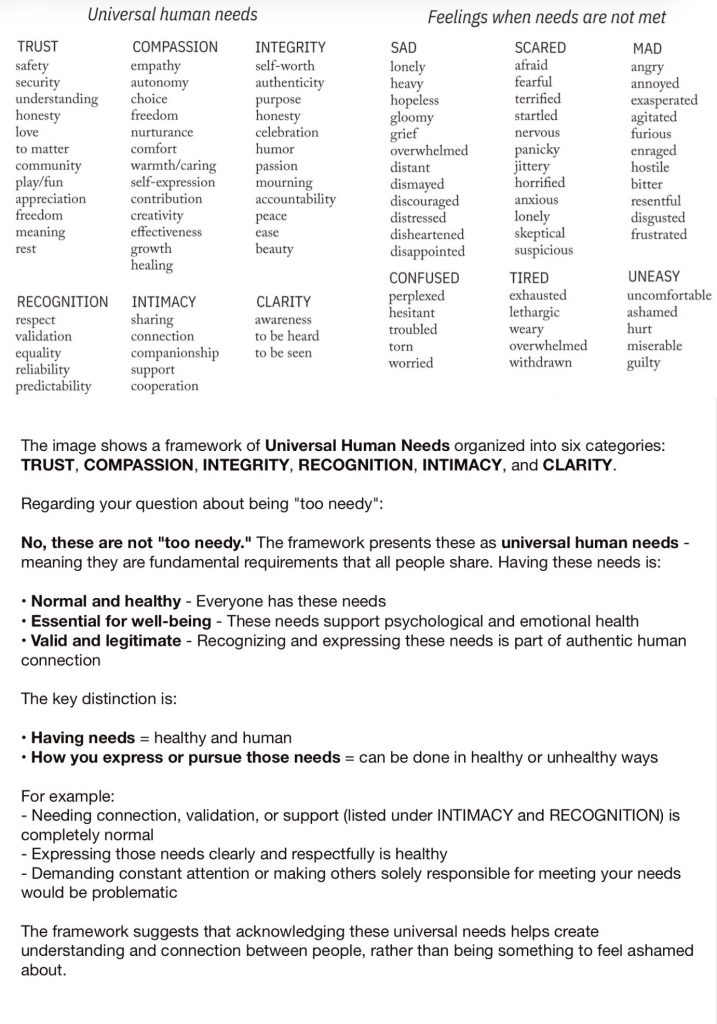
Tim Fletcher, a specialist in complex trauma, posits that 12 basic needs—spanning physical, emotional, and spiritual domains—must be consistently met to feel whole, content, and secure. Unmet needs, often stemming from childhood, lead to “crossed wires” where individuals misuse, for example, food or unhealthy habits to satisfy deep emotional cravings, resulting in trauma, addiction, and poor mental health.
- Safety
The foundation of healing. This isn’t just physical safety, but emotional safety —feeling like you can be yourself without fear of judgment, abandonment, or attack. - Physical Needs
The basics of life: food, water, sleep, and shelter. Those with trauma often neglect their bodies or live in a state of high cortisol, making physiological regulation a priority. - Nurturing (Affection)
The need for warmth and tenderness. This includes “Vitamin Touch” (appropriate physical touch) and kind words that validate your existence as a lovable human being. - Validation
Having your feelings, thoughts, and experiences acknowledged as “real” and “okay.” Validation tells you that your internal world makes sense. - Guidance and Direction
The need for a mentor or “healthy authority” to help navigate life’s complexities. It’s about learning the “how-tos” of life that trauma may have skipped over. - Protection
Knowing someone has your back. This involves being shielded from harm and being taught how to set healthy boundaries to protect yourself. - Acceptance
Being loved for who you are, not for what you do or how you perform. It is the antidote to the shame that tells trauma survivors they are “broken.” - Encouragement
The fuel for growth. This is the positive reinforcement that gives you the courage to try new things and persevere when things get difficult. - Respect
Being treated with dignity. It’s the recognition of your autonomy and your right to have your own opinions and values. - Understanding
The need to be “seen” and “known.” It’s the feeling that someone truly understands your perspective and where you are coming from. - Discipline (Structure)
Not punishment, but healthy structure. This provides a sense of order and predictability in life, which helps calm a dysregulated nervous system. - Comfort (Soothing)
The ability to be calmed when in pain. For trauma survivors, this often means learning how to receive comfort from others and, eventually, how to self-soothe.
Our brains are wired for love and pleasure. I use these to see where my life is out of balance so I can adjust and fulfill my basic needs. Note – It is impossible for one person to fulfill all our needs. They must get met from multiple sources. Our health and happiness is our responsibility.